Rock Your Weekend Lemon Berry Cake

When You Need a Conversation Stopper

Last time around, we did some breakfast food. This time, let's go all the way to the opposite end of the day and do a dessert!


We do hope you're not tired of blueberries yet, as they'll feature in this recipe too - this time as a supporting character instead of as a star.


Do you like berry lemonade? We think this is the best time of year for it, as the weather heats back up and the days get longer. The thing with berry lemonade, though, is that it gets awfully watered down in all the heat. But if you bake all the same flavors into a cake, there's no melting ice to ruin it. It's like six times as sticky, though, so maybe keep in mind the need for a plate and fork instead of a cup and straw.


Lemon Berry Cake


Ingredients:


1 box yellow cake mix (18 ounce, give or take a bit)

1 cup vanilla flavored Greek yogurt

4 extra large eggs (5 if using large or medium size)

1/4 cup plus 1 Tablespoon vegetable oil or melted butter

3 Tablespoons lemon juice

2 Tablespoons poppy seeds

1 cup cherry pie filling

1/2 cup fresh or frozen blueberries

1 Tablespoon strawberry syrup

1 teaspoon lemon extract


Tools:

Mixing bowl, spoon, measuring cups and spoons, blender or food processor, Bundt pan, non-stick spray, hand mixer (optional)


First off, pour that box of dry cake mix into the mixing bowl. Break up any large lumps you might find - it's easier to do this now, before adding any wet ingredients to it. 


Measure your yogurt and oil or butter into the bowl. Crack the eggs into it, and jab the yolks with the spoon to break them. Don't get too excited and start stirring it yet, though - we still haven't added the bulk of the wet ingredients.


Now is probably a good time to go wake the oven up (even though running the oven in warm weather is such a distasteful idea). You'll want to set it to preheat to 325. Look on the bright side: at least we're not making pizza or bread. We'd be telling you 450 for either of those!


Crack open your can of cherry pie filling (well, we always just use the canned stuff, but maybe your family is extra fancy and makes it from scratch. If you do make it yourself, we're jealous and would like to try some) and dump a cup of it into the blender or food processor, along with the blueberries, lemon juice, lemon extract and strawberry syrup. Blend it up until it's a purplish mixture about the consistency of a jar of store-bought jelly. Alternatively, you can choose to stop a little sooner and go for the consistency of preserves - lumps are fine, they just lend the cake more texture.


Take everything in the blender and pour it out into the bowl of cake mix, and then add your poppy seeds. If you intend to employ the hand mixer, give everything a once- or twice-over with the spoon before turning it on so it doesn't go "poof!" and give your kitchen a nice dusting of cake mix bits. If you're not using a mixer, stir gently by hand for about two minutes to make sure everything is all homogeneous.


Once you have your cake batter stirred smooth, grab your Bundt pan. Spray it lightly with the non-stick spray, making sure to get into all the little fluted nooks. Pay special attention to the center, also - we've discovered that if the cake is going to stick somewhere, it's there. Pour your cake batter into the pan - be sure to scrape the sides of the mixing bowl and get all the berries! - and smooth it over with the spoon.


Tuck it into the oven on a center rack and let it bake up for about 45 minutes. Sometimes the cake is set and ready to go after 45, but more often than not, it needs a few minutes longer than that. We think it varies based on the amount of syrup in the cup of pie filling.


It's ready to leave the oven when a toothpick poked into the deepest part of the cake comes out clean, and the edges have begun to pull away from the sides of the Bundt pan.


Allow it to cool in the pan for 10 minutes before you make any attempt to remove it - moving it too soon can result in cake chunks, instead of a whole cake. Wiggle a butter knife gently around the edges and the center if it's still holding on after you've tried inverting the pan.


This cake's texture will be springy and soft, and sort of custard-y when you cut into it. You can see for yourself in the photos - we jabbed it with the blunt end of a knife, and the cake just dented instead of crumbling. It even returned to shape before we got around to drizzling glaze over it!


Don't worry, it's done; we promise it’s cooked all the way through. The softness is the result of using yogurt when most cakes use milk or water, and rounding out the wet ingredients with egg and semi-solid fruits.


The berry flavors on their own aren't overly sweet - they're more tangy - so we do recommend breaking out your favorite glaze recipe or melting some store bought frosting over it before serving. Don't disappoint the resident sweet tooth!


When you decide to make this cake we want to see! You’ve seen how ours turned out we’d love to see yours! Show us over on Facebook


If you live in The Colony and you need someone to take a look at your appliances, don’t forget to give us a call. We’re here to keep your home running smooth whether something has broken, or just if you think something is off. 

Phone: (214) 599-0055
Website: https://appliance-rescue-service.com/contact-us


Culinary Adventure: Sourdough Pancakes!

Get ready to taste the best pancakes you’ve ever had. 


This recipe is going to require a good bit of planning ahead. It's going to take at least a week of forethought. We know, that sounds like an awful lot - usually these are one-day recipes, or even just a few minutes. But that week of planning will lead you to the best and fluffiest pancakes, and it will make things like bread and tortillas easier in the future if you choose to keep it going.


You're about to embark upon a culinary adventure. And it starts with a science experiment.

Allow us to introduce you to sourdough.


There are two ways to get started with this. Three, if you happen to have a friend with a starter who's willing to share (which we can basically guarantee they will be - keeping a starter alive requires frequent discarding, which means a nice chunk of active starter is up for grabs each time). You could start your own; there are tutorials all over the internet for it. You could order some dehydrated starter from a business, and bring it back to life with a little flour and water. Or maybe you can ask that friend we mentioned earlier - it seems like, after quarantine, everyone knows someone with a little sourdough monster living in a jar in their kitchen.


A starter requires a little bit of attention each day, as well as some feeding and some culling. Basically, once it's alive, you toss out enough of it to get it back down to a manageable size, then add flour and water until you've reached a 1:1:1 flour to water to starter ratio. Give it a stir, put a lid on it, and let it sit until feeding time tomorrow. Or if you're likely to bake a bunch, skip the discard and add that much more flour and water. (In case you haven't guessed, we bake a bunch.) And when you don't plan to bake too much, or if you might have to leave town and no one will be around to feed it, you can put it into the fridge or freezer so that it goes dormant.


Once you have that starter ready to go (it'll smell strongly of yeast and it'll be visibly bubbly), you get to do the fun part: make a great big mess measuring it out!


It's squishy. It smells funny. It might be a food. Your dog will love it. Please be sure to keep it away from the fuzzy friends in the house - sourdough starter is no good for them, but they have no way to know that themselves.


Ingredients:

1 1/2 cup active sourdough starter

1/4 cup melted butter

3 eggs

1 1/4 cup milk

2 teaspoons almond extract

1 2/3 cup flour

1 tsp baking soda

1 tsp baking powder

1 tsp salt

1 cup fruit or chocolate chips (optional - we used blueberries for the example in the photos)

Double double… what? What do you mean it’s too early for that still?

Double double… what? What do you mean it’s too early for that still?


Tools:

Mixing bowl, whisk, measuring cups and spoons, spatula, pan or griddle, non-stick spray. Optional: hand mixer.


Measure your liquid ingredients into the mixing bowl and whisk them all together. Try not to have too much of a difference in temperature between the eggs, milk and butter when you start mixing... because hot butter plus eggs plus milk is also the recipe for scrambled eggs.


Add your dry ingredients one at a time, holding the fruit or chocolate chips for last (if you've chosen to use them). Start gently so you don't wear the flour - but once you've got everything dampened, you can switch to using a hand mixer to speed things up if you prefer. Your batter will be thin, and possibly a little lumpy, but that's okay.


Start the heat under your pan or griddle and allow it to warm up to medium.


Fold your fruit or chocolate chips (again, assuming you've chosen to use them) into the batter. You should probably do this part by hand, as using a mixer can pulverize delicate fruit. Then again, pureed berries in the batter can dye the whole pancake vibrant colors. Maybe you're cooking for Rick Riordan fans who have been clamoring for blue pancakes. If that's the case, or if you want, say, pink or purple for a theme party, go ahead and smash all the berries you want.


Turn the heat under the pan or griddle down to low, spray with non-stick spray. Give the layer of spray a quick smear with the back of the spatula (this sounds weird, but it helps prevent the bubbly, uneven-looking cooking on the bottom) and pour a blob of pancake batter in.


Wait until you can see bubbles coming up to the uncooked top of the pancake most of the way into the middle, and the edges begin to look all set up. That usually takes a minute and a half to two minutes on our griddle, but you know your kitchen better than we know it, so make your own call here.


Slide the spatula under the pancake, lift and flip it all in one motion. Keep in mind, the more you drag it out, the more pancake batter drips you'll be stuck cleaning up later.


Cook for another minute on this side, lift an edge with the spatula and check for doneness. If it still looks pale, let it cook a little longer. If it's looking a bit scorched, lower the heat even more, and maybe feed that one to the family pet (cooked sourdough is fine!).


Once the pancake has reached the desired color on both sides, move it to a plate and start the process over again, repeating until you have enough pancakes or you run out of batter. We like to keep the plate of pancakes covered with another plate of the same size inverted over top to trap some of the heat, but be aware that it'll hold moisture too - and no one wants soggy pancakes unless they're drowning in syrup.


Now that you’ve got a stack of pancakes, let us know what you think over on Facebook! Is this going to be a regular breakfast addition for you? Would you rather try doing something else with your sourdough starter? (Hint: The internet has tons of ideas.) Or maybe you’d rather check out a different breakfast option entirely, something a little sweeter. For that we suggest checking out our Apple Oatcake, still just as good, if a little less work intensive.  


Now that we’ve helped you feed yourself, potentially for months if not years, it’s time to clean up the kitchen. What do you mean you’ve got a busted dishwasher? That’s ok, we can help with that too. If your dishwasher is busted and you live in The Colony or the surrounding area, we can help you. Dried out valves, peeling liners, flooding kitchens, we’ve seen them all and we’re here to keep your home running smoothly. Give us a call at ((214) 599-0055 ) or visit us at our website to set up an appointment today. 

delicious sourdough blueberry pancakes

Ovens, Ovens, Everywhere

Does It Matter Which I Pick?


Baking, boiling, steaming, roasting, if you want it, an oven can probably do it. After over 190 years we've made ovens that are capable of many different kinds of things. There are all sorts of shapes and sizes, there are even ones you can program with your phone! Which leads many of us to question, how do you choose the right oven for you? 


Let's start off with power sources. 


Gas ovens as the name implies use either natural gas or propane as the fuel source. While they are expensive up front if you have to install your gas line, they can save you money over time. Because of that upfront cost and the dangers that can occur, most new buildings won't install gas ovens. This is especially true for apartment buildings where leaks and hazards are more likely to occur. 


 However if you're willing to deal with the upfront cost gas ovens can be phenomenal at roasting meats and veggies. They heat quickly, retain moisture, and the open flame allows for more precise control of temperature. Many professional chefs swear by gas ovens. 


Your other option in terms of power is electricity. Electric ovens are cheaper to produce, but can be more expensive over time. They do take longer to heat up but once they are, they have a more consistent heat. They’re considered the ideal residential oven because they can handle almost any type of cooking you might want to use an oven for. If you’re looking to purchase a brand new oven, and you aren’t too picky about what it can handle, an electric is the way to go. 


We have to note, while there are products marketed as “dual fuel” ovens, they actually are an electric oven paired with a gas range. 


Next up let's take a look at size. 


Picture your ideal kitchen, how does it look? Do you have just one oven? Or do you want two? If you want two, are they together as one unit or two separate ones? All three of these are possible and the terms to go with them are pretty simple as well. 


Single oven - This is your standard “comes with most homes” combination oven and range unit. This term will also apply to single wall ovens. They come in a variety of sizes from 30 in to 36 in on average.  However, you can get them as small as 20 in or as large as 40 inches. 


Double oven - This is a single unit that contains two ovens that are the size of a standard oven when put together. They can be set to different temperatures and are ideal for cooking multiple things at once. You'll typically see these advertised around the holidays. 


Double wall oven - When you purchase this oven for slightly more than a mid-tier single oven, you get two separate ovens. Unlike the double oven, although these are stacked on top of each other they offer matching capacity. Why is this one called a double wall oven rather than something else? We don't know, we don't get it either. What we do get is that you're getting two full oven units for only a bit more.


Now… Where to put it? 


Have you decided on the size of your oven? Great! Now it's time to think about where you want it. Do you want it built into your wall? What about a cabinet? Or would you prefer having it as an island in the center of your kitchen? 


 Built-in Ovens - These are ovens that are slotted into your kitchen with the cabinetry then being built around it. It’s a very modern and sleek look that allows you to place your oven at any height for easy cooking. The downside here is that you’re going to have to have a separate range elsewhere within the kitchen. They’re also difficult to get at to repair if needed, and are tricky to move after installation. 


Freestanding Ovens - A freestanding oven is the all in one model. You’ll have an oven, a range and sometimes a grill, warming drawer or air fryer as well. The upside is that you can move them relatively easily, clean them (more) easily, and move around it as needed. 

Built-Under Ovens- These are very similar to the built-in oven, except they are meant to go under your countertops. Again you’ll need to purchase a separate range, but you’ll have an oven that blends more into your kitchen. 


Now now with all of that covered, what are you looking at getting? Is it a double gas free-standing oven? They do exist, although you'll have to find a specialty shop to custom make it. 


What type of oven are you thinking of getting? Do you want a built in? What about a double? We know we’ll be day-dreaming about a side by side double oven for a while. Let us know your thoughts in the comments below or over on our Facebook page! We’d love to hear from you. 


If you’re here not because you need  a new oven but instead because yours is giving you fits, we’re still here for you. Whether it’s got a weird burning smell, it’s not heating right or someone melted plastic in it, we can help. Reach out to us via our website or by phone ((214) 599-0055) to schedule your appointment today. At Appliance Rescue Service, whether you live in Allen or the surrounding area, we’re here to help you. 


It’s That 70s Decor!

It’s Come Back For Round Two, And We’re Not Surprised

Have you looked around the stores lately and thought “wow, I remember seeing some of these trends in the 70s!” Or maybe you’re wondering why so many people on Facebook & Instagram are proclaiming their love for the color mustard yellow suddenly. Decor, like fashion, goes in cycles. For the last one hundred years we’ve gone back and forth between very organic and inorganic fashions. From the hard angles of Art Deco vs the curves of Art Nouveau, and black and white of the Jet Age to the earthy tones of the 70s. The cycle repeats over and over, and after a year of white kitchens and living rooms, people are CRAVING color and texture. This week we’re taking a look at some of the decor trends from the 70s that have come back, and ones we hope stay firmly in the past.


Things That Have Come Back

These are the things that have come back that we're actually really excited to see again.

Retro Colors 

After last year being All White everything we are so excited to see color this vibrant and Rich back in our lives! Yes, a lot of these colors are earthy tones, but that doesn't mean you can't have them bright and welcoming. If you don't want to have the whole room dominated by hunter green, don't! Use that for the accent colors. Paint just one wall. Paint the molding and trim around the room. Or do like we've done for ages: keep the room a neutral shade and just use pillows, throws, and similar objects to bring in the colors you want.


Macrame

Did you learn how to make friendship bracelets as a kid? Macrame is the same thing. Lots and lots of knots. The great thing is that you can use it to add texture, and have it match colors already in your home, or use it to bring in entirely new colors. It can also be used to make all sorts of things, from clothes to furniture. 


Velvet

Soft and luxurious, velvet is back! Couches, pillows, chairs and curtains, we love seeing velvet around the home. Velvet is all about giving yourself somewhere soft to rest at the end of the day. 


Animal Prints

Animal prints have always been fashionable, but during the 70s you saw them everywhere and mixed together in all ways possible. This time around, don’t be afraid to mix and max prints with different patterns or colors than what you might have seen in the past. And you can even get them cruelty free! 


Fringe and Shag Rugs

Continuing on with the idea of comfort, imagine a thick, rich carpet under your bare feet. You sink into it, and it’s cloudlike underfoot. Shag rugs never really went out of style, so much as they were relegated to teens rooms. Now, we’re realizing just how comfy they are in the rest of the home. Fringes just add to the benefit of having a rug by adding texture to a room and extending the space of a rug further. 


Hanging Chairs

Remember when we said you could make your own furniture out of macrame? This is part of what we meant. While it’s not the only way to get a hanging chair, it is certainly a fun one. Hanging chairs give a room a sense of playfulness and motion that most furniture doesn’t have, and we love it. We’re happy to see hanging chairs making their way back inside the home, no longer relegated solely to the front porch. 


All the Rattan

Rattan, much like macrame, gives a room a very airy look. In the 70s it was explored as an alternative in color and cost to the heavier, darker woods of the previous eras. Made of willow or cane, even with a very dense weave, it has a very light feeling to it. You can use it for anything from shelving to chairs, tables to headboards. There are also a wide array of patterns that rattan can be worked into to give different looks.  


Terrazzo
Ahh terrazzo, what can we say about this strange material? It’s a composite mixture, made of chips of marble, glass, or quartz, when you want the sparkle, but not necessarily the cost. Less garish than metal fleck paint, and far more affordable for home decor. It can be bright and colorful, mixing many materials together, or you might have it in monotones. While it used to be that you would only see it as countertops and flooring, now it’s being used for all sorts of things again. 


Wallpaper

Big bold wallpapers are back, graphic patterns that capture the attention. This time though, we advise only doing one wall, and ensuring that you frame it with molding that matches the rest of the room. This way the wallpaper holds sway in the room, but it won’t dominate the way wallpaper did in the past. 


Things That We Hope Won’t Come Back 

That brings us to the trends we hope we don’t see come back. We admit, this is only our opinions on the matter, but we hope you’ll be able to see our reasoning. 


Fake Wood Paneling

Just. No. Out of all of the options for how to decorate your walls, please don’t do this. Not only does it make a room look dark and heavy, but the wood grain is an insult against proper design. This type of decoration only belongs on the front of an Atari console, not on the walls. We highly suggest shiplap instead. 


Floating Stairs

This one we dislike primarily as a safety measure. Even with the best of intentions and care, we’ve seen many people fall off these stairs, and no one wants that.


Floral Sofas

While we love the graphic patterns of our wallpapers, and even florals, there’s something to be said about floral sofas from the 70s. They were huge and overdone, no matter what you did about them.  And let’s not even go into the colors of the fabrics themselves. 


Colonial Furniture

Remember how we talked about wood paneling making a room seem too dark? Colonial furniture didn’t help. This heavy, turned wood was a staple in many homes, but it never seemed to quite fit in.  


Fondue Pots 

Especially in a Post-Covid society. Need we say more? 


Those are the things we’re excited to see again and a few we hope don’t make their way back. What about you? Do you agree with some that we don’t? Do you have tips for how to use some of the ones we showcased? Let us know in the comments below or over on our Facebook page, as always, we love to hear from you! 


If, on the other hand, you’re here to talk shop because your oven has popped, we can still help!

Reach out to us via our website or phone ((214) 599-0055) and we can figure it out. Wherever you live in Garland or the surrounding area, we are here to help. 


Build Your Own Barbecue Sauce

15 Minutes and you’ve got a customized sauce that can’t be beat. 


Everyone appears to be getting ready for Memorial Day. In case you've forgotten (like we always seem to), it's the end of this month. And now that anyone over the age of 16 can get vaccinated, you might even be able to set up a backyard get-together with some of the people you've only been able to see on Zoom or at a distance all year.


barbecue sign in neon

Good news! Even if you have forgotten the holiday, and you've been putting zero forethought into a party, we're here to help you make it look like you're totally on the ball with this one. You're ready for this party and you didn't even know it. Go you.


We're about to throw a fistful of things in a pan and make something awesome: homemade BBQ sauce. It's not like all that store-bought stuff that's too sweet and full of things you can't pronounce. This one will be a new "family secret" recipe that's the envy of the neighborhood block party a couple years from now.


And here's the kicker. It'll only take about 15 minutes of your time.


You're going to need less than a dozen ingredients - unless you change it to your own taste - and chances are they're all already in your kitchen or pantry.


 Ingredients:


30 ounces of tomato sauce

3 Tablespoons honey (or maple syrup, agave, corn syrup - whatever you have handy or like best; we had fantastic results with raspberry syrup)

2 Tablespoons molasses

1 Tablespoon Worcestershire sauce

1 Tablespoon hot sauce (again, choose what you like best - we like Tabasco or Sriracha)

1 teaspoon apple cider vinegar

1 1/2 teaspoon ground mustard

1 teaspoon onion powder

1 teaspoon garlic powder

1 teaspoon ground cayenne pepper

1/2 teaspoon salt

1/2 teaspoon black pepper


Tools:

Measuring cups and spoons, saucepan with a lid, whisk, storage container or bottle, can opener (if using canned sauce)


Open up your tomato sauce and pour it into the saucepan. (How often do we really use a specific pot for its intended purpose? This is notable!) Light the burner and bring it up to medium-high. You might want to cover it if it's heating quickly, as tomato sauce likes to make a splatter-y mess.


Measure in your other liquid ingredients: the Worcestershire sauce, vinegar, the honey/syrup, molasses and any hot sauce you might want to use. It helps to do the stickiest one last and to spray the measuring cup with non-stick spray before you start measuring. Alternatively, you can just scrape the measuring cup clean with a regular spoon and throw them both into hot water as soon as you're done. Whichever way you like, just make sure not to let the molasses and honey or syrup dry in place. It's awfully irritating to try cleaning them once they've become a congealed lump, and they like to stick to the sponge or brush as they come off the cup.


Once all your liquid (semi-liquid? Molasses can be tricky) ingredients are in the pan, give everything a good stir with that whisk you only use once in a while. Put the lid back on the pan if you chose to use one.


We know the dry ingredients don't sound like you're using enough of them. Trust us, you are. The flavors will meld together as the sauce heats. And you can always add more of an individual spice later if you really feel you need to - but remember, the only way to lessen the amount of a spice in a sauce is to make more sauce! So unless you really need half a gallon of BBQ sauce (maybe you do, we're not sure here - you could be planning a really BIG outdoor party), just start small.


Scoop up your little teaspoons and half teaspoons and tablespoons of spices and add them to the pan. If you're a big fan of making things blend easier, you could even sift them into the pan rather than lump them in - but we feel like the heat, the moisture and the whisk will take care of any clumps for you over the next few minutes. The only thing that routinely gives us trouble is the mustard.


After everything is in the pan, give it a good stir with the whisk. Put the lid back on (unless you're not using one - daredevil) and lower the heat down to medium-low. Allow everything to simmer together for about eight minutes. To prevent scorching, stir it often, and make sure to scrape the sides.


At the eight minute mark, turn off the heat and remove the lid. Give it a few minutes to cool before you attempt taste testing or moving it to any kind of plastic container. Unfortunately, your sauce will probably not be the envy of the neighborhood if it's full of melty plastic bits.


Should your sauce not be spicy enough, add some more hot sauce - or if you're super adventurous, puree a hot pepper or two and stir that in. If it's lacking a zesty, tangy note, add a little orange extract or a squirt of lemon juice. If you'd rather it be sweeter, add a bit more of your honey/syrup or stir in some superfine sugar.


Make sure you keep a note of whatever you did to make the recipe your own! And enjoy your holiday.


And that’s that! Let us know if you opt to make this in the comments below or over on our Facebook page. We’d love to hear about the different spices you add to make it your own. 


So long as your grill is fine, you’re good to go after this point, but what if it’s your stove that’s on the fritz? If that’s the case, you can give us a call  at ((214) 599-0055) or head over to our website. Wherever you live in Carrollton and the surrounding areas, we’ve got you covered. Appliance Rescue Service is here to help and here to keep your home, and your home appliances, running smoothly. 

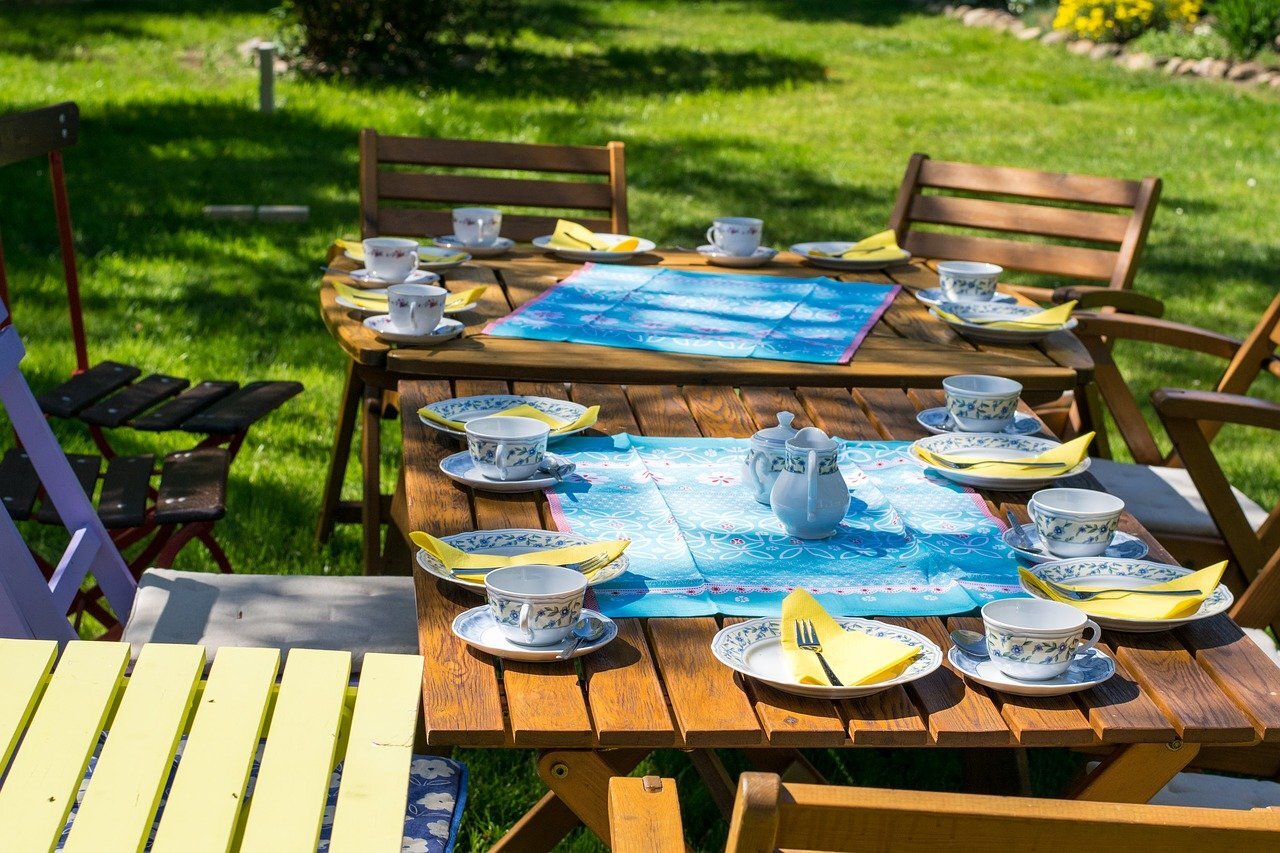
party in the yard, tables set and ready for the barbecue