
oven repair

Why Appliances “Snap” in January After the Holiday Rush

How December Overuse Leads to January Breakdowns in Dallas Homes

We’re at the end of January now, and many are experiencing or have already experienced issues with their appliances post-holidays. The thing is, it’s not your appliances that are the issue. It’s the strain of December. Just like most of us feel exhausted in that week after Christmas and before New Year's, our appliances do too. Let’s take a look at why your appliances feel the strain, whether new appliances are any better, and what you can do as a homeowner to take care of them. 

The Hidden Toll the Holidays Take on Your Appliances

December puts strain on all of us. It’s chaos, decorations, parties, gifts, and shopping, and so much food. Before you know it, the month is gone, and you’re struggling to figure out where it went. During that you expect your appliances to be able to keep up. From the endless hours of cooking, washing linens over and over, both for display and for guests, plus holiday clothes. Not to mention keeping all the food at proper storage temperatures. Your appliances feel the strain just as much as you do. Is it any surprise that your appliances might be exhausted once it’s all over? Then after the holidays, you work to get your house back in order, while slipping into the “New Year, new me!” mindset. This means that your household appliances may or may not get a break after the holidays, and so is it any surprise when they buckle under the strain? 

As our owner pointed out from experience, the appliances that fail the most are refrigerators and washing machines, while other sources note that the problems extend to dishwashers and ovens as well.


Washing machine handling heavy laundry loads after the holidays

Courtesy of Piyapong Saydaung

Especially in Dallas, it’s not the cold that gets to our appliances, it’s the consistent work. So January isn’t when things break due to the cold for us. Instead, it’s when the problems that developed in December really come to the forefront.  


Do New Appliances Bounce Back Better, or Just Have Fancier Error Messages?

It’s a fair question, especially if you’ve invested in newer appliances over the last few years. Intuitively, it feels like newer machines should handle holiday stress better than older ones. In reality, that isn’t quite how it plays out.

Newer appliances are not immune to post-holiday issues. December still puts heavy strain on the same core components that have always done the real work behind the scenes. Pumps, bearings, seals, heating elements, and motors all experience increased wear when machines are run longer, more frequently, and at higher capacities than usual. That stress doesn’t disappear just because the appliance is newer.

What has changed is how that stress shows up.

Modern appliances are far more likely to surface problems through technology. Error codes, sensor warnings, and performance alerts often appear shortly after the holidays. While this can feel frustrating, it doesn’t necessarily mean the appliance is more fragile. In many cases, it simply means the machine is telling you sooner that something is off.

Older appliances often degraded quietly. A seal might weaken, a bearing might start wearing down, or a pump might struggle long before a homeowner noticed anything was wrong. Newer appliances, with their added electronic components, tend to flag those issues earlier. That added transparency can be helpful, but it also introduces more potential failure points through sensors, control boards, and software-driven systems.

Overloaded refrigerator after the holidays in a home kitchen

Courtesy of Kindel Media

The safe takeaway is this: new appliances don’t really “bounce back” better after the holidays. They just communicate stress sooner. The wear still happens, it’s just more visible. Catching it early is a good thing, but it doesn’t mean the underlying strain is any less real.


What Can Homeowners Do After the Holidays?

January is the best time to slow things down and give your appliances a chance to recover. A few small adjustments and basic checks can go a long way toward preventing a minor issue from turning into a major repair.

One of the most important steps is avoiding continued overloading. After weeks of holiday-level use, running back-to-back max-capacity cycles in January keeps stress levels high. Space out heavy laundry loads and dishwasher cycles when possible, and avoid stuffing machines to their limits right away.
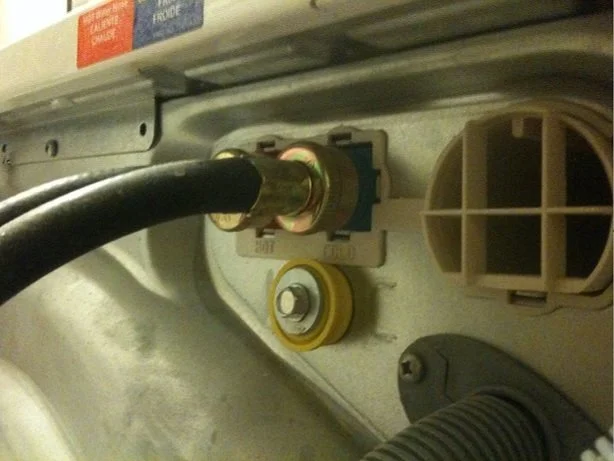
Homeowner inspecting washing machine for post-holiday wear

Courtesy of BD2412.

Simple post-holiday maintenance checks also make a real difference. Cleaning dishwasher filters helps prevent drainage and pump issues. Checking washer hoses and door seals can catch early wear before leaks develop. Emptying dryer lint traps and making sure vent airflow is clear improves efficiency and reduces strain on the motor. Wiping down refrigerator door seals helps maintain proper temperatures without forcing the compressor to work overtime.

Equally important is paying attention to early warning signs. Unusual noises, longer cycle times, poor cleaning or drying results, temperature inconsistencies, or new error codes are all signs that an appliance may be struggling. These issues don’t usually resolve on their own, but they are often easier and less expensive to address early.

January service calls are frequently more straightforward than emergency repairs later in the year. Addressing a small problem now can prevent a complete failure down the road, when schedules are tighter and disruptions are bigger.


Why January Issues Are Usually Cumulative, Not Sudden

When appliances fail in January, it rarely comes out of nowhere. In most cases, holiday stress simply exposes wear that was already there. Components that were borderline get pushed past their comfort zone in December. Once normal routines resume, those small issues finally become noticeable.

This lines up with what we see in real-world service data. January service calls tend to focus on essential appliances like refrigerators and washing machines. People often act when daily life is disrupted, not when the first subtle warning signs appear. By the time an appliance affects food storage, laundry, or basic routines, the issue has become impossible to ignore.

The good news is that this also means many January problems are preventable with timely attention.

Your appliances feel the strain just as much as you do. They’re the workhorses that keep your home running smoothly month after month, and after the holidays, they deserve a little extra care. If something feels off, sounds different, or just isn’t performing the way it should, it’s worth having it checked.

If your appliances are showing signs of post-holiday stress, give Appliance Rescue Service a call. We’ll work with you to find a time that fits your schedule and send out a technician to give them the attention they need. You can call us directly or visit our website to schedule an appointment today.


Website
Call: (214) 599-0055

Why Does My Oven Keep Flipping the Circuit Breaker?

Modern appliance showing an error code after heavy use

Courtesy of Polina Zimmerman

That Dishwasher’s a Lie: What to Know About Pre-Owned Appliances

The red flags no inspector will catch—but your wallet definitely will

Congratulations on your new house!
We apologize for the dishwasher-shaped disaster.

Person holding a miniature house with a porch in one hand, and a key on a keyring with a house keychain

Courtesy of Schluesseldienst

Many of us have been there. You think you’re getting a bunch of fantastic appliances as part of the package for your new home. You’ve got the inspector’s stamp of approval. And then? You find out—yeah, it runs. Right into a $2,000 floor replacement.

This week, we’re looking at some of the things people wish they’d been told before signing on the dotted line.

The Problem with “It Works”

When “functional” means “barely alive.”

Here’s the problem: a home inspector is meant to identify structural problems in a home before it’s sold. Their job is to check for gaping leaks, mold, or giant holes that may or may not lead to Narnia. Or to flag any potential red flags in the home’s history—like that one time the stairs had to be replaced due to termites.

But if appliances are included in the sale, their job stops at “does it turn on?”

As we’ve said over and over: an appliance can technically function and still be struggling—causing inefficiency, damage, or real safety hazards.

Important takeaway: If appliances are included, inspect them yourself. Make sure they work the way you want them to.

Red Flags & Real Costs

What they won’t show you up front (but you’ll absolutely pay for later).

This isn’t about calling anyone out—unless we’re writing a recall post. But it’s worth remembering: a realtor’s job is to show you how the house is now, not walk you through its full appliance history.

Here are some common problem spots:

  • Refrigerator – Cooling issues, signs of refrigerant leaks, unsealed gaskets

  • Oven/Range – Inconsistent heating, faulty burners, safety concerns

  • Dishwasher – Leaks, pump issues, water damage you can’t see

  • Washer/Dryer – Mold, clogged vents, odd noises, lint buildup

  • HVAC – Mold, rust, hidden costs from poor maintenance

And just because something looks clean doesn’t mean it was deep-cleaned or that hidden issues aren’t still lingering. You can wipe up mold blooms, but depending on the type, it may still be thriving inside the walls.

Questions to Ask Before You Buy

Because the seller sure isn’t volunteering this info.

If the appliances are included, ask yourself: Why are they being left behind?
It could be convenience. It could be generosity. Or it could be that the seller’s tired of dealing with them.

Either way, a few friendly questions can go a long way—and they can be phrased as light conversation to keep things smooth with the seller and agent.

Try asking:

  • Can I test the appliances during a showing or second visit?

  • How old are they, and can I see proof of maintenance?

  • What’s the plan for disposal or replacement if they die tomorrow?

Strategy, Not Sentiment

Don’t fall in love with the fridge (or anything else).

It’s easy to get caught up in the look of the kitchen suite—but appliances can fail between closing and move-in. Rather than falling in love, think strategy.

If you don’t like the appliances, consider negotiating them out. Ask the realtor. Ask the seller.

Some buyers even find success casually suggesting they’d prefer the appliances removed in exchange for a lower sale price. Not every seller will go for it, but if the units are old or visibly failing, some will be understanding.

If removal isn’t an option, it’s time for a family strategy session:

  • What’s on your must-have list?

  • What are you willing to live with?

Does the kitchen suite need to match? Can you deal with mismatched finishes? Do you have to have a working fridge on day one? Your answers will be different from someone else’s, but having that clarity up front helps keep expectations grounded.

Know What Comes With the House

Don’t assume. Verify. Then verify again.

If you’ve never bought a home before, hear this loud and clear: verify everything. If you have bought a home before, well, you probably already learned this the hard way.

Don’t assume anything—from your move-in date to the status of the appliances to who’s paying what in closing costs. Talk through all of it with your realtor, and keep notes.

That includes:

  • Who’s doing the inspections?

  • Who pays for problems that arise?

  • Do those problems affect the sale price?

  • When is your final walk-through, and what should still be in the house at that point?

We’ve heard more than one horror story about buyers expecting a washer and dryer that never materialized. Sometimes it was never part of the deal. Other times, the seller just changed their mind last-minute. If it’s not in writing, it’s not guaranteed.

Think Past Move-In Day

Eventually, everything breaks. Be ready.

It’s unfortunate but true: every appliance has an expiration date. Even if they seem perfect on move-in day, that doesn’t mean they’ll last the year.

Start by asking about local disposal rules. Some cities offer curbside pickup. Others require you to schedule in advance—or fine you for putting appliances out unannounced. Your realtor should be able to get that info quickly.

Even if the appliances seem solid, you’ll rarely get a maintenance binder or history log. So assume nothing. Just because it’s running today doesn’t mean it will be next spring. That’s why we always recommend: as soon as you move in, start budgeting for replacements.

They may be new to you, but they won’t stay new forever.

Your Future Self Will Thank You

If you’re feeling even slightly unsure after reading this—walk away. If you’ve seen sketchy signs, especially involving water or fire, walk away. Your wallet will thank you. Your future self will too.

There’s no reason to be stuck with someone else’s grime. And more importantly, you shouldn’t be stuck with their safety hazard.

If you’ve recently purchased a home and didn’t get a chance to ask all the right questions, we can help. Schedule a maintenance appointment with us. One of our technicians will do a full walkthrough of the appliances in your home, let you know what issues we find, what to watch for, and how to keep everything running in tip-top shape.

You can reach us through our website or give us a call.

Appliance Rescue Service — helping you keep your home running, whether it’s old or new, so that you can keep running too.

Website

Courtesy of user32212

Call: (214) 599-0055