What is An Air Fryer and Does It Really Work?


Can you tell us what tastes better than french fries? Or donuts? What about fried chicken? 

There's something about frying that makes your brain just go 'yum'. But... it's not particularly healthy is it? All that oil makes it very easy to gain weight even when you're careful about what you eat. And let's not even talk about what it can do to your heart. 


berliner-17811_640.jpg
 

This conundrum of "yum" vs "wanting to stay healthy" has been a problem since we first discovered that all of the delicious foods could clog your arteries. People have tried everything to keep the delicious flavor and still stay healthy. 

Air fryers are the latest attempt by the appliance industry to give us the foods we want, while still maintaining some semblance of health. 


We had a bunch of questions though and set about trying to answer them. 


What is an air fryer and how does it work?  

Do they REALLY work? 

Are there any rules to using them?

Should you get one?


Feel free to click through to your most pressing answers, or keep reading to get to all of them. 


First up, what is an air fryer? 

An air fryer is, at its most basic, a small convection oven with the footprint of a five gallon bucket, and the ability to cook, at most, a 2.5 lb chicken. (Which is actually really small if you look it up.) The food is placed in a  wire mesh basket, and the air is rapidly circulated around the chamber, allowing the food to cook approximately 20% faster. 


Air fryers can also be used with a variety of different accessories, from cake pans, to pizza pans, to griddles which expand how useful it is, provided you do the additional research for using those extras properly. 

air fryer.png


Do they REALLY work? 


Yes, they really do. The trick though, after extensive reading and polling people, is that just like any other tool, there's a learning curve. You need to be willing to research the particular quirks of your machine and what's needed for the best outcome. Yes, we know it means you can't just plug it in and start having fun. It bites. BUT the good news is that you can make those delicious doughnuts and not have a guilty conscience? Does that help? (It did for us. Hence why this post is so long.) 


Not everyone agrees on whether air fryers work or not, but we think that the biggest issue there is that not everyone is taking into account a few rules that you need to follow for optimum working conditions. 


So what are the rules? 


You use too much oil / You use too little oil

Let's start with the biggest one. If you use too MUCH oil, you're forgetting the basic principle that this is an 'air fryer' not a 'deep fryer'.You don't need to soak the food in oil for it to get the crispy exterior. By the same token. you do need a little bit. (We suggest a quick spray of your favorite oil using something like a misto.) We think that's the majority of what went wrong with WIRED's testing of their air fryer.  While you can get a crunchy exterior just using the air fryer without any oil, at that point you're using it like a convection oven, not allowing the air and light oil to circulate around the food. 


You don’t preheat the air fryer

Yup, just like every other cooking appliance, your air fryer does need time to heat up. It does take less time than your traditional oven, but it needs that heating time all the same. 


 Your air fryer isn’t getting any air

If you have your air fryer crammed onto the counter, surrounded by different things, how is it going to pull air in? Answer, it's not. Without external air flow, the air fryer cannot work. So make sure it can breathe


You cook in the air fryer without cleaning

You wouldn't cook in a frying pan without cleaning between uses, treat your air fryer the same way. After you're done using it for a meal, clean it up and you'll be good to go for next time. Otherwise things can get into the heating elements, burn and then your kitchen, and your food is going to be smelling horrible. Not fun! 


The foods are too wet

If your food is soaking wet or covered in a drippy batter when you put it into the air fryer, it's going to run into a problem. Much like having too much oil, the fryer isn't going to be able to 'breathe' so to speak and it'll be more like steaming your food instead of 'frying' it. 


spinach-2216967_640.jpg

 The foods are too light

If you're trying to cook foods that are too light, say spinach leaves or something similar, they can float around. The rapid air circulation in the oven will cause things to go all over the place. 


 The food is too small

If you're working with the mesh basket rather than one of the attachments, it is possible for food that's been chopped too small to fall between the gaps and end up getting burned. To avoid this, just shake the basket over your sink or garbage can to make sure nothing falls out. 


You don’t check the food’s temperature

This is more of a food safety thing than anything. An air fryer is still cooking your food, so you still need to check the temperature of all foods before you eat them, especially if you're dealing with meats. 

You put too much food in the basket

Much like the outside of your air fryer needs space to allow it to pull in air, the inside needs space for that air to circulate. If you cram the basket full of food, the air isn't going to circulate properly and you're going to end up with something inedible. 

Should you get one? 

We think that for those with small apartments, or if you're living in a dorm, a good air fryer is a solid investment. Especially if you're willing to do the research and get a multi function one, this can easily replace a majority of the major kitchen appliances, without having to take up a ton of space. If you are going to get one, make sure that you buy the one with the best reviews, and that is large and durable. You'll want it to stand up to time and regular use. 


If you're just wanting one to try out the process, or to be part of the fad, (which is fine, we still don't judge ;) ) then go ahead and get a smaller one. You wouldn't want to purchase one with all the bells and whistles if you aren't sure it's something you'll use regularly.


Are you going to take the plunge and test out an air fryer? Do you have one already and have recipes you’ve mastered? Let us know over on Facebook! 


And if your other appliances are having issues give one of our techs a call and we’ll be happy to help! 


What Does Energy Efficient Even Mean?

Hand on top of bills next to calculator

Why is it that every time you turn around your electric bill seems to be creeping higher? While we could go into energy resources, global resistance to renewable energy, inflation,  yadda yadda, let’s address something simple that all of us deal with. Our appliances


Yup, your appliances. Your appliances account for between 10 and 30% of your yearly electric bills.  And if they aren’t cared for, maintained and repaired regularly? That amount can go even higher. There are ways around that though, including purchasing energy efficient appliances, helping your current appliances be more efficient and making other small changes around the home. 


But what does energy efficient really mean? 

When people say ‘energy efficient’ they’re meaning that the appliance in question uses less energy to get the same amount of work done. So if you were to compare the non-efficient dryers to the efficient ones, you’re going to end up with fewer kiloWatt hours used for the same amount of time and the same load of laundry. 


Fortunately, there is a way to easily find appliances and other household items that are energy efficient. 

You’ve probably seen that big blue label on boxes at the appliance store, or in bold letters: ENERGY STAR. Or seen it advertised next to computers, dryers and lightbulbs CERTIFIED BY ENERGY STAR, as part of the list of features. These appliances have been developed and tested to the Energy Star standards. 

Energy Star is a program that’s run by both the Environmental Protection Agency (EPA) and the Department of Energy(DOE). It was developed in 1992 to promote and develop energy efficient policies, procedures and products.   An appliance that has the Energy Star label on it is one that has been tested by their scientists and been found to save energy, money and to reduce the carbon footprint. 


According to their website, what makes a product worthy of the Energy Star label is the following: 

-Certified products must deliver the features and performance demanded by consumers, in addition to increased energy efficiency.

-If the certified product costs more than a conventional, less-efficient counterpart, purchasers will recover their investment in increased energy efficiency through utility bill savings, within a reasonable period of time.

-Energy efficiency can be achieved through broadly available, non-proprietary technologies offered by more than one manufacturer.

-Product energy consumption and performance can be measured and verified with testing.


-Qualified refrigerators are at least 15% more efficient than the minimum federal efficiency standard.

-Qualified TVs consume 3 watts or less when switched off, compared to a standard TV, which consumes almost 6 watts on average.

-Office equipment that qualifies automatically enters a low-power "sleep" mode after a period of inactivity.

-Qualified light bulbs (CFLs) use two-thirds less energy than a standard incandescent bulb and must meet additional operating and reliability guidelines.

-Qualified furnaces offer a rating of 90% AFUE or greater, which is about 15% more efficient than the minimum federal efficiency standard.

What changes are there that make an appliance energy efficient? 

All sorts of changes have been made to appliances over the last 30 years, working to make them more efficient. For many this means better sensors and insulation to keep temperatures at the needed levels and seal them in properly.Refrigerators for example are becoming better at sealing in cold over the last few years with a change in their insulation. Others change how much water they use and how it’s heated.  Washers, for example, have been engineered so that they use approximately 25% less energy and between 70-75% less water per load. 


What does that mean for you

Like we said above, your appliances can account for roughly 20% of your household’s yearly electric costs. By replacing older models you can save between 10% and 50% of the energy you were using before, depending  on the models. “Households are saving hundreds of dollars annually as a result of increasing appliance efficiency standards,” says Shannon Baker-Branstetter, the senior energy and environment policy council at CR. Buying one major energy efficient appliance can save you over $100 in a year. The more appliances you buy, the more that number goes up. 


If you can’t replace, or you want to do more research, you can still cut back on your energy bill in unexpected ways. 

-Wash your laundry on cold rather than hot, and consider throwing a dry bath towel in when you dry them.  (This lets your clothes move around more easily and helps them dry faster. )

-Check around all of your appliances for dust or lint. Having blocked ventilation areas is an easy way for an appliance to overheat and thus draw more electricity. 

-Unplug! If you have appliances you only use once a day (say your toaster or coffeemaker) unplug them. Most models, especially older ones, will still draw power even if they aren’t turned on. 

-Set timers for devices such as tvs and computers so that they shut themselves off at night. 


These days more and more Energy Star certified appliances are being created over non-certified ones. While it used to be that you had to pay a high price by comparison, these days it’s possible to save money on the initial purchase and over time. If you’re looking to keep your current appliances for the time being, but would like to give them a check up, schedule an appointment with our technicians. We’d love to help you cut back on your energy bills. 

The Most Ridiculous Smart Devices On The Market

Have you ever wanted a remote controlled tea kettle?  What about a gesture controlled salt shaker? Or a voice controlled toilet? 

When we were researching for our post last month about smart tech, we ran across several very strange items. All of them, naturally, claim to be ‘smart’ devices. They take the idea of “Internet of Things” a bit too far, though.  Because really, why would you need a gesture controlled salt shaker?


We thought to share 17 of the strangest and funniest devices that we came across in our hunt for information. Let us know below which one was your favorite! 


Egg Minder 

While the video is amusing, it doesn’t tell you much about Quirky’s Egg Minder. All you can gather from this video is that it keeps track for you on just how many eggs you have? Presumably this means you would have an app just for this. Which really, when it comes to space on our phones vs not having to  count how many eggs we have on hand, personally, we’re going for the phone space. 


Miliboo Smart Sofa 

Miliboo claims to be the world’s first smart sofa. With  connection to your smart assistants, a wireless charger built in, vibration and smart speakers built into it, and led under lighting. The question is: why? If you really love the IMAX experience we could maybe see it, but at the same time is it really necessary? 


Aevena Aire 

Our next strange product is Aire, a flying robot for your home. It’s meant to work indoors and move itself around people, while still being quiet. It’s one part security camera, one part NannyCam? Which just leads us to question “ if this got hacked, how hard are we going to get hit in the head by it?” 


Laurastar smart iron

Do you ever  question how to iron something? No? You look it up on youtube? So do we! Which is why we don’t get the point of this iron. It teaches you how to iron, beeps at you when it needs more water, and it adjusts temperatures to the fabric in question. “A system that thinks on your behalf and is thus a guarantee of the best possible ironing and effortless premium care.” Yeah we prefer thinking for ourselves, thanks? 


Hatch Baby Smart Changing Pad 

This one we’re torn on. On one hand, the app seems rather intelligent, if a bit much. You can track your baby’s weight, how much they’re eating, going to the bathroom, etc.  On the other hand, the changing pad doesn’t seem to be much more than a changing pad with a scale and a cushion. To top it all off, the app is free? So what’s really the point of the changing pad? 


Onvi Prophix 

You know that the obsession with cameras has gone too far when we’re putting cameras into our toothbrushes. It doesn’t take photos of your face mind, it takes photos of the inside of your mouth as you’re brushing.  


Kuvée Bottle 

Kuvee is one that while it didn’t meet its mark, it did have potential to grow into something great. They created a wi-fi connected wine bottle with a touchscreen that claimed to keep wine fresh for up to 30 days after being opened. Whether they managed that claim is up in the air as the company shut their doors in 2018.


Juicero  

Juicero had SO much potential. As a juice delivery service they could have been great. Instead they focused on a fancy, smart connected product that you didn’t actually need? It turns out that the packets (which were supposed to taste rather good) could be squeezed by hand and you would get the same amount of delicious juice. And you still didn’t have to clean anything other than the glass you drank it out of. 


Chip Smart Cookie Oven  

Ah.. The Chip Smart Cookie Oven. Let’s face facts, this is an Easy-Bake for adults. It came with single serve ‘dough packets’ (think Keurig but for cookies) but you could only make 4 at a time. They still took 10 minutes to cook properly and you didn’t even get to lick the spoon. For the same amount of time, and less money you can make at least 4 times that AND you get whatever dough is left in the bowl. ‘

HapiFork 

HapiFork is a haptic feedback fork that aims to, according to their website,  “ helps you monitor and track your eating habits. It also alerts you with the help of indicator lights and gentle vibrations when you are eating too fast.”  While we understand that their is a link between eating too fast and weight gain, we question why we need a fork that vibrates? 


Bruno 

The Bruno can is both a trashcan and a vacuum cleaner, although not in the usual sense. You simply sweep things in front of the inlet in the bottom of the can and it will suck up anything in front of it. It also bugs you to take out the trash and lets you know when you’re low on trash bags! 


Kérastase Hair Coach 

Have you ever wondered if you’re brushing your hair too hard? Or maybe if your hair is frizzy? No? Neither have we. And yet still this product from Keratase and Withings exists. The list of features includes a gyroscope, a microphone, an accelerometer and conductivity sensors. All of that, in your hair brush.  


Do you have any to add to the list? Or ones that you want to purchase or have purchased for yourself ( we don’t judge)? Let us know in the comments or over on Facebook. And if your appliances aren’t cooperating, reach out and we can schedule an appointment with one of our technicians to get you back on track. 

Celebrating Pi Day with Rhubarb Maple Meringue Pie

Today we celebrate Pi Day! No, not Pie day, that is January 23rd and we were rather sad when we saw that we had missed that one. 


pi-1453836_1920.jpg

“First and foremost, Pi Day is a celebration of the mathematical constant, π (pi), or 3.14159265359.”  You can see that the first three numbers are the date that we celebrate it on, if you’re writing the date 3/14.  


I know, I know, it’s math, and you are here for food. But! Don’t leave yet!


 Thankfully many people have made the association between Pi and pies. If Pi is used to work out the diameter of a circle, it naturally lends itself to pies of all sorts. Not just the sweet variety, but pizza pies too! So many delicious circular foods to explore and 3.14 makes it all possible. 


Pi Day was first celebrated on a large scale in 1988. Larry Shaw, a physicist who worked at the San Francisco Exploratorium at the time organized the event, bringing together both the public and museum staff. The assembled marched around the circular spaces of the museum and then tucked into a bunch of pies, according to a piece by Newsweek. 


We’re joining in on the celebration with a recipe from The All American Desserts Book by Nancy Baggett for a delicious Maple Rhubarbe Meringue Pie. This sweet and tart mix makes a delicious combination no matter when you choose to share it.The mild, light meringue topping adds a slight sweetness, which helps balance the tang of the rhubarb and the richness of the pastry. And really, who’s to say that pi cannot be celebrated every time you bake a pie? 

Bunches of rhubbarb and  purple artichokes at a market


Single crust All-Purpose Pie Pastry Dough

All purpose flour for dusting dough

Filling


4 ½ cups ½ to ¾ inch long pieces of rhubarb ( which is roughly 1 ½ to 1 ¾ pounds with the stalks trimmed) 

¾ cup granulated sugar (divided) 

1 ½ teaspoons fresh lime or lemon juice

¼ -⅓ cup orange juice if needed *

3 ½ tablespoons cornstarch

Pinch of salt

⅔ cup maple syrup, preferably light amber 

2 large egg yolks 


Meringue


4 large egg whites, completely free of yolk and at room temperature *

Generous ¼ teaspoon cream of tartar

Pinch of salt

¾ cup plus 2 tablespoons powdered sugar

½ teaspoon vanilla extract 


Rolling Out The Pastry

Lightly grease a regular 9-inch pie plate or coat with nonstick spray. 

If the dough is cold and stiff, let it warm up until slightly pliable but still cool to the touch. Generously dust it on both sides with flour. 

Roll out the dough between large sheets of baking parchment into a 13  inch round. Occasionally check the underside of the dough during rolling and smooth out any wrinkles. Gently peel off the top sheet of paper, then pat it back into place. 

Flip the dough: peel off the bottom sheet. 

Center the round, dough side down, in the pie plate. 

Gently peel off the remaining paper.

 Smooth the dough into the plate and patch any tears, if necessary.

 Using kitchen shears of a paring knife, trim the overhang to ¾ inch. 

Fold the overhang under to form an edge that rests on the lip of the plate.

 Finish by fluting with your fingers or pressing on the edge with the tines of fork. 

Prick the pastry all over with a fork. 

Loosely cover the pastry and place in the freezer for 15 minutes or  in the refrigerator for at least 30 minutes and up to several hours

Baking the Pastry

Position a rack in the lower third of the oven and preheat to 400 degrees F.

 Insert a large square of aluminum foil coated with the nonstick spray (or use non stick foil) oiled side down into the chilled shell, smoothing the foil over the bottom and sides and folding it out over the rim to cover the pastry. 

Fill the foil with dried beans, spreading them so they extend up the plate sides. 

Set the pie shell on a rimmed baking sheet. 

Bake for 25 minutes. 

Carefully remove the foil and beans from the shell. 

Continue baking for 5-10 minutes longer, or until the shell is nicely browned all over.

 If the edges brown too rapidly, cover with strips of foil (or a pie shield). 

Transfer the pie shell to a wire rack to cool. 

The pie shell will keep, covered at room temperature for up to 24 hours. 

Mixing Up the Filling

In a large nonreactive saucepan, thoroughly stir together the rhubarb, ½ cup of the granulated sugar, and the lime juice. 

Let stand, stirring once or twice for about ten minutes or until the sugar is mostly dissolved and the mixture looks wet. 

Bring to a boil over medium high heat, stirring. 

Cook, stirring until the rhubarb pieces exude some juice and just begin to soften but still hold their shape, about four minutes. 

Remove from the heat and let cool for about ten minutes. 

Put the rhubarb in a sieve set over a large glass measure. 

Press down hard on the rhubarb to extract as much juice as possible. 

You should have ½ to ¾ cup juice, necessary, and enough orange juice to yield ¾ cup.

Reposition the rack in the middle of the oven and preheat to 350 degrees F. 

Rinse and dry the saucepan.

 Put the remaining ¼ cup granulated sugar, the cornstarch and salt in the pan and whisk until well combined. 

Add the rhubarb juice, whisking vigorously until the mixture is completely smooth. 

Bring to boil over medium- high heat, whisking. 

Lower the heat slightly and cook, whisking constantly until very thick, smooth and translucent, about 1 minute. 

Remove from the heat. 

Vigorously whisk in the maple syrup until the mixture is completely smooth. 

In a small deep bowl, whisk the egg yolks until lightly blended. 

Pouring slowly and whisking constantly, add about ¼ of the maple mixture to the yolks. 

Add the yolk mixture to the saucepan, whisking. 

Cook over medium high heat, stirring constantly and frequently  scraping the pan bottom with a wooden spoon, until the mixture boils for a full 1 ½ minutes. 

Do not undercook, or the filling may thin out later.

 Stir the reserved rhubarb into the maple mixture. 

Cook, stirring just until the rhubarb is piping hot: the filling will be fairly thick. 

Cover and set aside. 


Whipping Up The Meringue

In a completely grease free and dry large bowl, combine the egg whites, cream of tartar and salt. 

Using a mixer on low speed with a whisk shaped beater if available, beat the mixture until frothy. Raise the speed to medium and continue beating until the mixture is smooth fluffy and opaque, but still too soft to hold peaks.

 (Check by stopping and lifting the beater)

 Immediately add the powdered sugar 2 tablespoons at a time, beating for about 20 seconds after each addition. 

Add the vanilla. 

Raise the speed to medium high and beat for 2 minutes, scraping down the sides of the bowl as needed. 

Raise the speed to high and beat for about 1 minute longer or until the meringue is fluffy and stands in firm but not dry peaks. 

Assembling the Pie

Turn out the hot filling into the pre-baked pastry shell. 

Set the pie on a rimmed baking sheet. 

Spread half the meringue over the filling, making sure the meringue touches the pastry all the way around.

Top with the remaining meringue, mounding it in the center. 

Attractively swirl the meringue with a table knife or the back of a large spoon. 


Time to Bake! 


Bake for 12 to 17 minutes or until the meringue is evenly tinged  with brown all over. 

For even browning, rotate the pie from front to back after six minutes. 

Transfer the pie to a wire rack.

 Let cool for at least two hours and preferably three or four hours before chilling or covering to minimize any beading of the meringue. 

The pie will keep, covered, at room temperature for up to twelve hours (some beading may occur after the first few hours) or refrigerated for up to 2 days.  The crust will soften with longer storage. Let come to room temperature before serving. 

Additional Notes

For the orange juice, make sure that you have it on hand, but don’t measure it out until you’ve seen if you need it or not.  


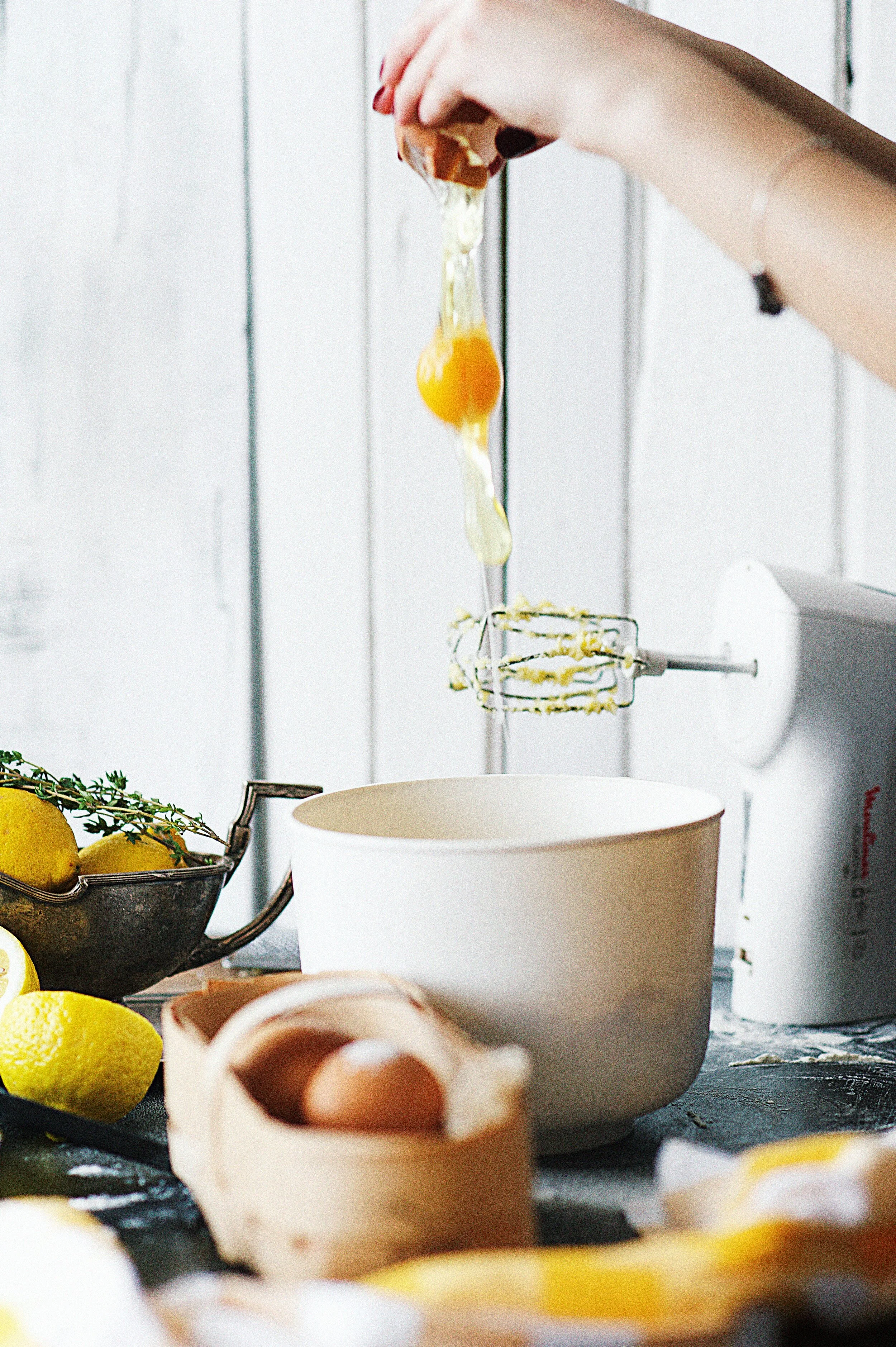
For separating egg yolks and whites, check out this video here! It’s really easy this way, and you’re less likely to end up with a punctured egg yolk than if you did it using the shells. (Although if you can do it that way, go you!) 


Rhubarb has a lot of juice that can make the bottom of the pie soggy and gross. The rhubarb is briefly boiled ahead of time with sugar to release those juice. That is then drained off, reduced down and cooked with the rest of the filling. 


If you don’t want to fuss with making pastry dough, or prebaking one, you can always pick up a premade one at the supermarket. 


So that’s our contribution to Pi Day! Let us know what some of your favorite pies are over on our Facebook page! 


If you notice during this process (or before or after haha) that there are issues with your oven, reach out! We can send one of our technicians to come out to you based on your schedule and help get your oven back in tip top shape! 

Cleaning With Vinegar- BUSTED


If you were to look up how to clean almost anything in your kitchen on the internet, you’d find at least one site calling for vinegar. Your coffee maker? Vinegar. Your dishwasher? Vinegar. Musty towels? Vinegar! 


Vinegar is an acid, and most of the time, recipes call for distilled white vinegar added to water. Nothing special. But does it really do what it’s supposed to? 


Well. Sometimes? 


“The acid reacts with the organic materials in stains and dissolves them away,” says Joe Glajch in a chat with Consumer Report. So it does work with cutting through grease. It’s also an excellent disinfectant. Just think about how it keeps mold from growing during the pickling process. It’s also great at cutting through grease. It’s also great at descaling coffee makers.  Vinegar is also handy when it comes to cleaning windows and leaving a streak-free shine on them. 


However, it’s not an all-purpose cleaner the way many people think it is. Vinegar, either on its own or combined with water (which is just going to dilute it), doesn’t function that way. And think about the smell! We can’t speak for others, but we don’t care for the scent that using straight vinegar leaves in your kitchen. 


So, to break down the myths on vinegar, let’s tackle 10 things you absolutely should not use vinegar on and just why that is. 


Here are 10 Things You Most Certainly Should NOT Use Vinegar To Clean.


Electronic Screens - 

Unlike windows, your computer monitor, tv and phone screens are all treated glass. Acids can damage that coating leaving your devices less responsive at best and toast at worst.

white-apple-iphone-on-wooden-table-48605.jpg
 
brown-framed-sunglasses-near-two-drinking-glasses-2229930.jpg

Marble & Granite Countertops or Floors-

Marble and granite when they have vinegar sit on them for any length of time will be ‘etched’ or ‘crazed.’ This means that patterns in the stone will be eaten away, leaving the spot discolored in strange patterns. Which can look beautiful if you’re doing it intentionally, but if you just paid a bundle for new countertops, maybe not?  


Hardwood Floors -

Hardwood floors can also be destroyed by vinegar, but for a different reason. Here the treatment that is applied to wooden floors is being stripped away rather than portions of the wood itself. 

appliances-architecture-ceiling-chairs-534151.jpg
 
time-lapse-photography-of-egg-1070893.jpg


Egg Stains - 

Egg + vinegar = a fantastically coagulated and gross mess. Whether you’re hoping to clean up egg that you just got on you or something that has been sitting on the fabric for any length of time, just don’t. Just like it does when cooking when applying acids to an egg, the proteins in the egg will curdle and become more of a mess for you to clean up. 


Dishwasher-

This one we were surprised by during the course of our research. We’ve suggested using vinegar before for cleaning your dishwasher. Much like for coffee makers, it makes a very effective descaling (liquid?).  What we didn’t know till now is that the vinegar can eat away at the rubber pieces within your dishwasher. 


Pearls- 

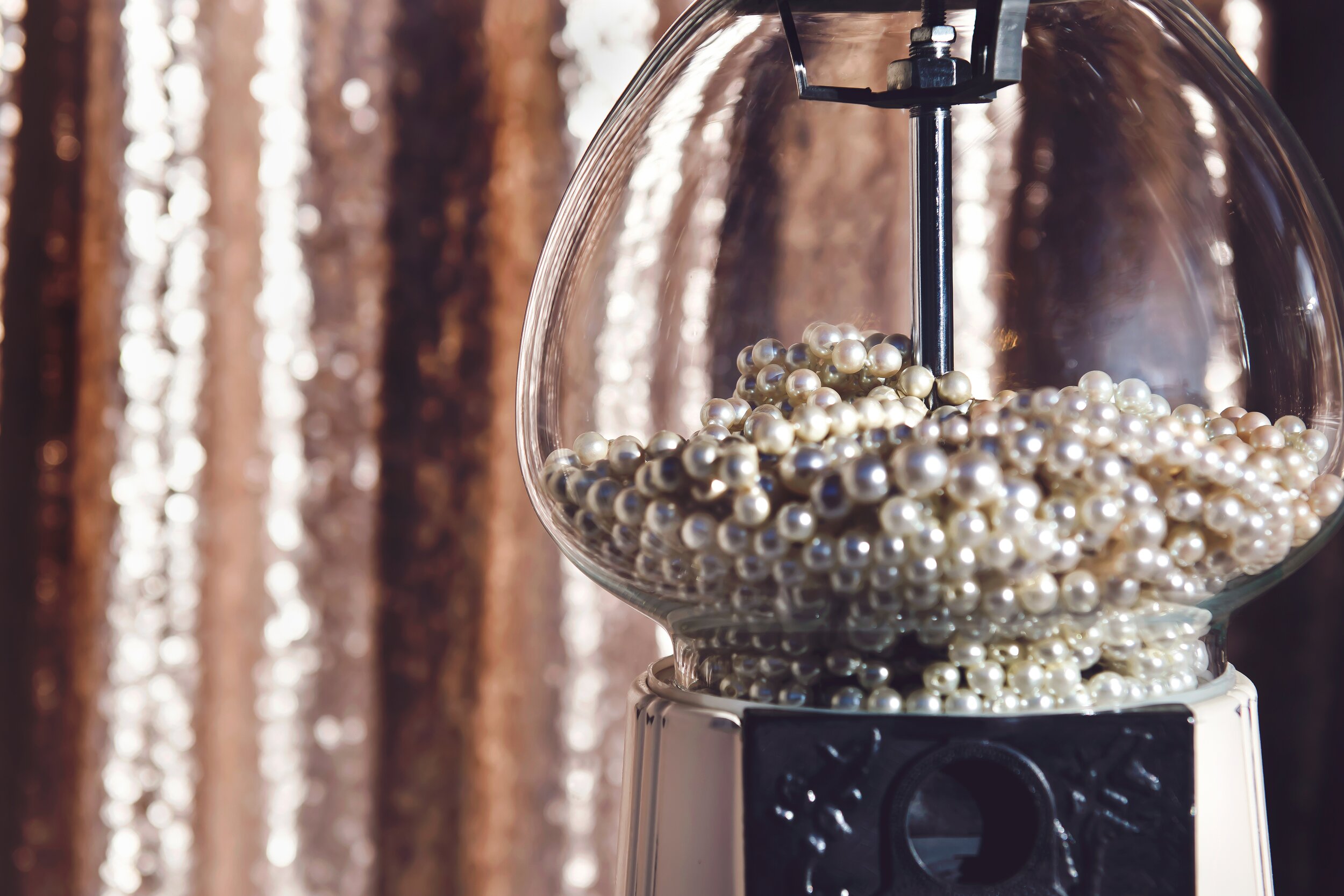
Pearls are built up layers of sediment and nacre. Once again, this is something that is dissolved by acids. So if your pearls are dirty, don’t use anything with vinegar in it to clean them. Your best bet is to start with water and add a drop or two of Dawn dish soap. (Sadly we cannot claim that is a  sponsored plug.)


Small Appliances-

While the plastic and glass surfaces on small appliances can definitely be cleaned with vinegar, the rubber, and stainless steel parts are a different matter. As we’ve said, vinegar eats away at rubber. As for stainless steel, there are different grades of it. The lower quality ones, like what’s used on most small appliances, are.. cheaper.  They are more prone to rusting, and that process is sped up by acids like vinegar. 


Knives -

Metals and vinegar don’t mix. Period. Game over. Tools such as knives and peelers, those with exposed edges, are especially vulnerable. Vinegar can leave the knife’s edge pitted, it can also eat away at the finish on the knife. Other metals to keep away from vinegar are aluminum and copper.


green-white-philips-iron-53422.jpg

Your Clothes Iron -

While scaling can happen in your clothes iron, if you leave water in it between uses, vinegar is a bad idea to use here. Most clothes irons actually have a protective coating on the inside that vinegar can eat away at over time. 


Washing Machine-

Much like your dishwasher, many posts call for using vinegar for your washing machine. It can be used to soften towels and rinse them free of built-up detergents. It can be used to descale your washer. It’s great for getting out that funky washer smell.  And these things are true. But like the dishwasher, it can eat at the rubber parts of your washing machine. Which means that you’re going to end up water flooding your house eventually. Not fun! While you can use it occasionally (say maybe 4 times a year, tops?) using it consistently is going to wear down that rubber and eat away at it. 

General Rule of Mixing Cleaning Supplies 

We get it, everyone wants to save where they can. If you can make your own laundry detergent or soap, why not your own all-purpose cleaner? The problem here is that so often, you’re given a general recipe rather than specific amounts that can end up with a useless mess rather than a cleaner. Or people don’t research, and so you can end up mixing a congealed mess at best and a toxic chemical at worst. 


Two examples of that last point are Castile soap and bleach. 

If you mix vinegar and Castile soap, you’d think that you’re getting the grease-cutting power of vinegar and the cleaning power of Castile. Except you don’t. You end up with a gross, curdled mess. 

Bleach, on the other hand, if mixed with vinegar, is going to give you chlorine gas. Mix up this attempt at a cleaning material, and you’ll need medical treatment for your eyes, throat, and lungs. 

So, all in all, be careful and research thoroughly when you’re looking to mix your own cleaning supplies. Check that the recipes have exact amounts and that they’ve been safely tested by multiple people. 

Remember, if any of your appliances have been damaged by vinegar, or just typical wear and tear, Appliance Rescue Service is here to help. Schedule an appointment today with one of our helpful technicians. 

 Have you tried using vinegar for cleaning in the past?   Were you surprised by any of the things on our list? Do you use other green cleaning supplies or products?  Let us know in the comments below or over on our Facebook page