
Learn the overlooked mistakes that contribute to grill fires, food safety issues, and expensive backyard mishaps.
There are few things that say "summer" quite like the smell of something sizzling on the grill. Burgers, steaks, vegetables, maybe even a rack of ribs if you're feeling ambitious. But while most homeowners worry about overcooking dinner, the biggest grilling mistakes usually happen long before anyone flips the first burger.
According to the National Fire Protection Association (NFPA), gas grills are involved in roughly 9,200 home fires every year, and grill-related injuries send more than 21,600 people to emergency rooms annually. Nearly one in five grill fires involves a grill that wasn't properly cleaned, and July consistently ranks as the busiest month for grill fires.
That's a lot of ruined dinners.
The encouraging news? Most of these incidents aren't random accidents. They often come down to maintenance, preparation, and a little overconfidence. Here are nine mistakes that can turn your backyard cookout into a story you'll be telling for all the wrong reasons.
Maintenance: The Problems That Start Days or Weeks Before the Cookout
Many grill fires begin before anyone even buys the hot dogs.
Grease is one of the biggest culprits. Over time, grease and fat collect inside the grill and in the drip tray below. When enough builds up, all it takes is a little heat to turn leftover residue into an impressive flame. That's why experts recommend cleaning both the cooking grates and the grease collection areas regularly, not just scraping off yesterday's burger bits.
Another maintenance issue isn't even about fire.
Wire-bristle grill brushes have come under increased scrutiny because loose metal bristles can break off during cleaning and stick to the cooking grate. If one ends up on your food, it can be swallowed without anyone noticing. Several medical organizations now recommend inspecting your grill carefully after cleaning or considering alternative cleaning tools that don't use metal bristles.
Finally, there's the mistake that's equal parts maintenance and planning: discovering an empty propane tank just as your guests arrive.
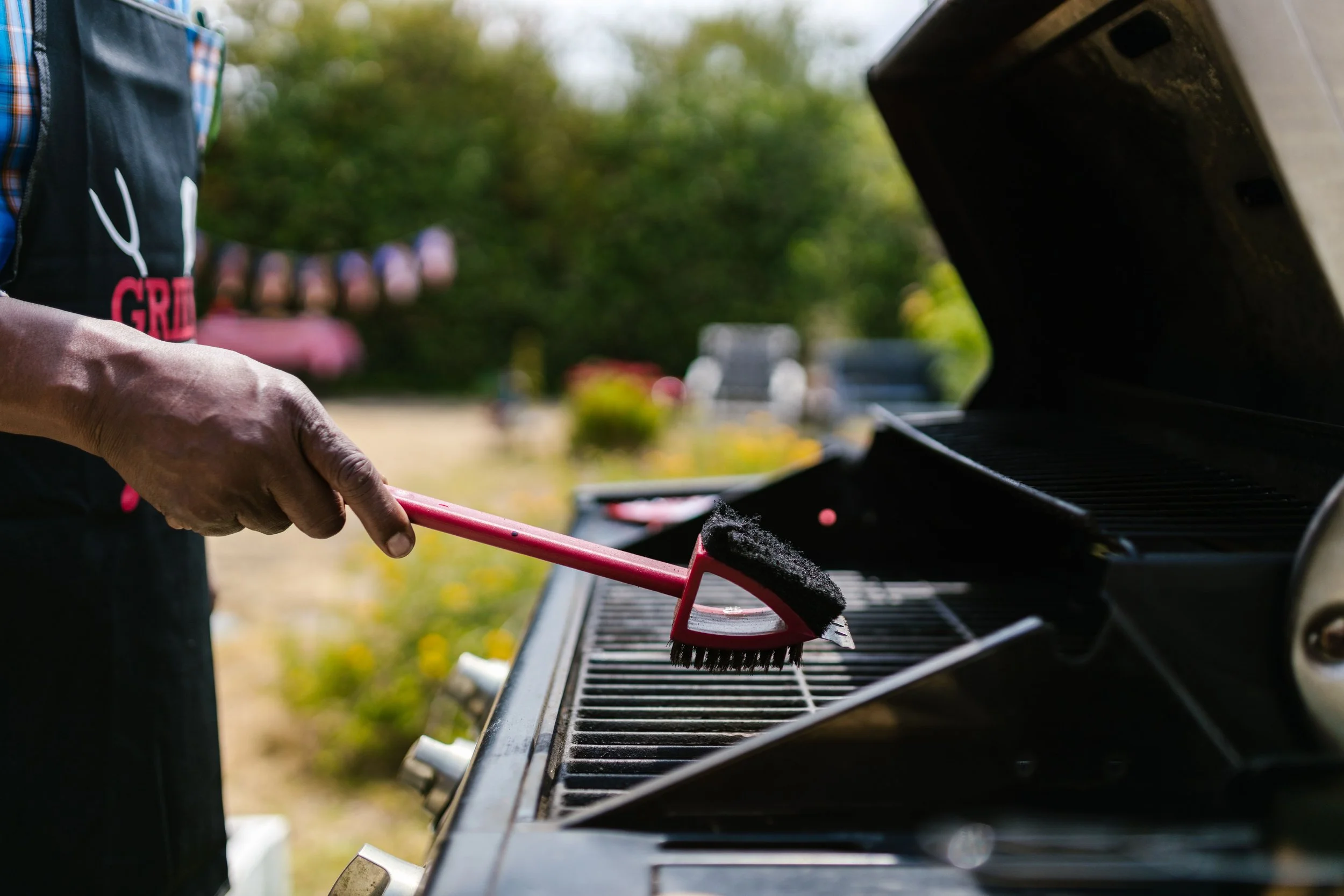
Courtesy of RDNE Stock Project
It isn't dangerous, but it may be the fastest way to turn "Dinner's ready!" into "Does anyone know if the pizza place is still open?" Checking your fuel before guests arrive is one of the easiest grilling habits you can develop.
Preparation: Small Shortcuts Tfhat Can Create Big Problems
Some grilling disasters start with perfectly reasonable ideas.
One cook, trying to light charcoal quickly, stuffed extra newspaper into the grill. Instead of speeding things along, burning scraps of paper floated out of the grill and drifted across waiting guests. Lesson learned.
Another infamous story involved using gasoline instead of proper charcoal starter. The result wasn't a faster fire. It was an exploding gas can that singed hair, eyebrows, and nearly damaged the house itself. It's an extreme example, but it illustrates why manufacturers and fire safety experts repeatedly recommend using only products designed for lighting charcoal grills.
Food preparation can also create problems.
One barbecue guest recalled chicken being brushed with the same marinade that had held the raw meat. Everyone who ate it became sick afterward. If you're marinating meat before grilling, make a separate batch for basting or serving. Reusing marinade that has already touched raw meat is a shortcut that simply isn't worth taking.
Preparation isn't the glamorous part of grilling, but it may be the most important.
Complacency: "I've Done This a Hundred Times"
Confidence is a wonderful thing. Until it convinces you that the rules no longer apply.
Some of the funniest grilling stories begin with someone thinking, "I've got this."
One backyard pig roast seemed to be taking forever to cook, so more hot coals were added around the meat. Unfortunately, rendered pork fat ignited, and flames erupted from every crack in the makeshift cooking pit. As it turned out, the thermometer was inaccurate. The pig had been cooked all along.
In another story, a rooftop barbecue attracted enough attention that someone called the fire department. Instead of a dangerous fire, firefighters found friends grilling burgers and steaks. The embarrassment lasted much longer than the meal.
Indoor grilling can be just as memorable. While testing spice rubs, one home cook filled an apartment with enough smoke from grilled chiles and spices that guests had to leave the apartment until the air cleared. It certainly made for an unforgettable party, just not for the intended reasons.
Then there's the homeowner who looked outside to discover flames shooting from a gas grill, hot enough to melt the control knobs and side shelves. A suspected propane hose problem may have contributed, but stories like this are exactly why experts recommend routinely inspecting hoses and connections before grilling season begins.
The common thread isn't bad luck.
It's assuming that because yesterday's cookout went smoothly, today's will too.
A Better Backyard Starts Before You Strike the Match
Nobody expects their family barbecue to become a cautionary tale.
Fortunately, most grilling mishaps are preventable with a little preparation. Clean away grease buildup. Inspect your propane hoses and fuel supply. Use the right lighting materials. Keep food safety in mind. And remember that familiarity shouldn't replace good habits.
Because the best grill stories are about the food, not the fire.
If you're the kind of homeowner who believes regular maintenance is easier than emergency repairs, you're speaking our language. At Appliance Rescue Service, we help homeowners keep the hardworking appliances inside the house running reliably all year long, so you can spend less time dealing with breakdowns and more time enjoying summer in the backyard.

Courtesy of Kampus Production
Call: (214) 599-0055