Easter Feasts From Around The Globe

As promised, this weekend we are checking out Easter feats from around the World! Even if Easter isn’t something you celebrate, join us anyway! After all, everyone loves food! We’ll be travelling all over the world for this post so grab you notebook and buckle in. 

To make things easier on your poor pilot this weekend, we’re going alphabetically down our list.

Feel free to click any of the sections below to skip around.

Argentina

Bermuda

Brazil

Bulgaria

Colombia

Czech Republic

Denmark

England

Ecuador

France

Germany

Greece

Italy

Mexico

Netherlands

Norway

Poland

South Africa

Spain

Sweden


Argentina

 First up is a quick stop in Argentina. 

In the traditionally Roman Catholic country, even the well known empanadas are given a makeover for Lent. Called empanadas de vigilia the usual fillings of chicken or meat are swapped out for tuna, white fish, or a  mix of blue cheese and walnut. From Argentina with Love has shared a delicious recipe for these that we had to try out! 


After the period of Lent has ended though , everyone wants to celebrate! This means gathering around with all of your family and friends invited for a barbecue, which the Argentinas call an asado. There’s lamb, chicken, beef, chorizo and all the malbec you could want. There’s also homemade chocolate eggs, although that tradition is sadly waning with time.  
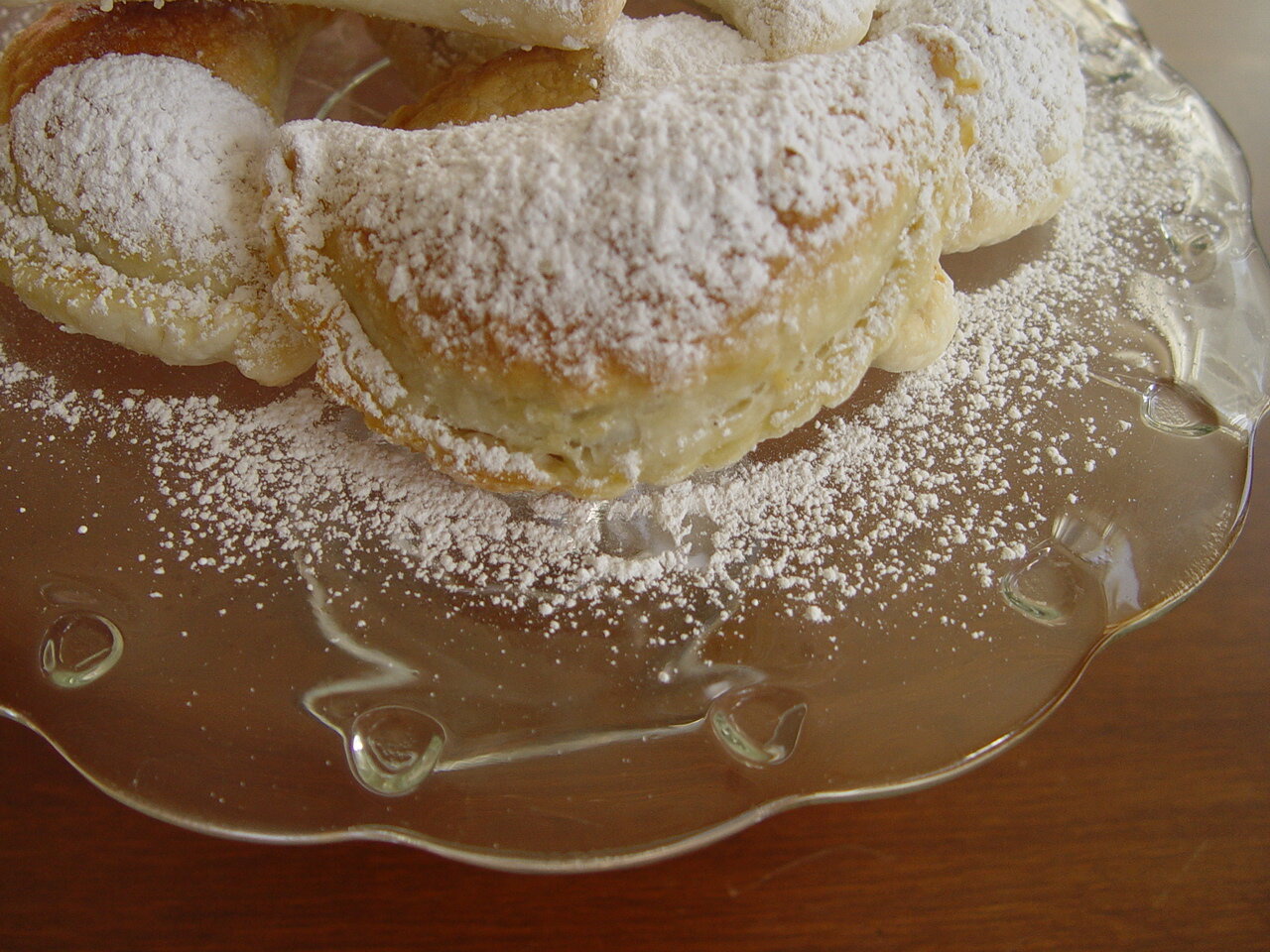
Argentina- Empanadas with Roquefort.jpg
 
Bermuda- cod fish cakes.png

Bermuda

When you go to Bermuda for Easter, there are two big traditions, when it comes sto food at least. Cod fishcakes and hot cross buns.  It’s customary to have the fishcakes before you go off to church on Easter Sunday. The former is thought to have arisen from an old superstition that your home would burn down if you didn’t eat one. (If you are from Bermuda, please let us know more about this one in the comments? We are curious!)  The Bermudian has an amazing recipe for cod fishcakes, as well as other Good Friday traditions over on their blog.


Brazil 

While this recipe initially came from Portugal, it has become an Easter tradition in Brazil. Called Bacalhau, or salt cod, it is to Brazilians and Good Friday what ham is to Americans on Easter Sunday.  While the salted cod is eaten year round, at Easter it is paired with wine, which is special for a country that usually opts for beer. Check out this recipe over at Oliva’s Cuisine to try it for yourself. 
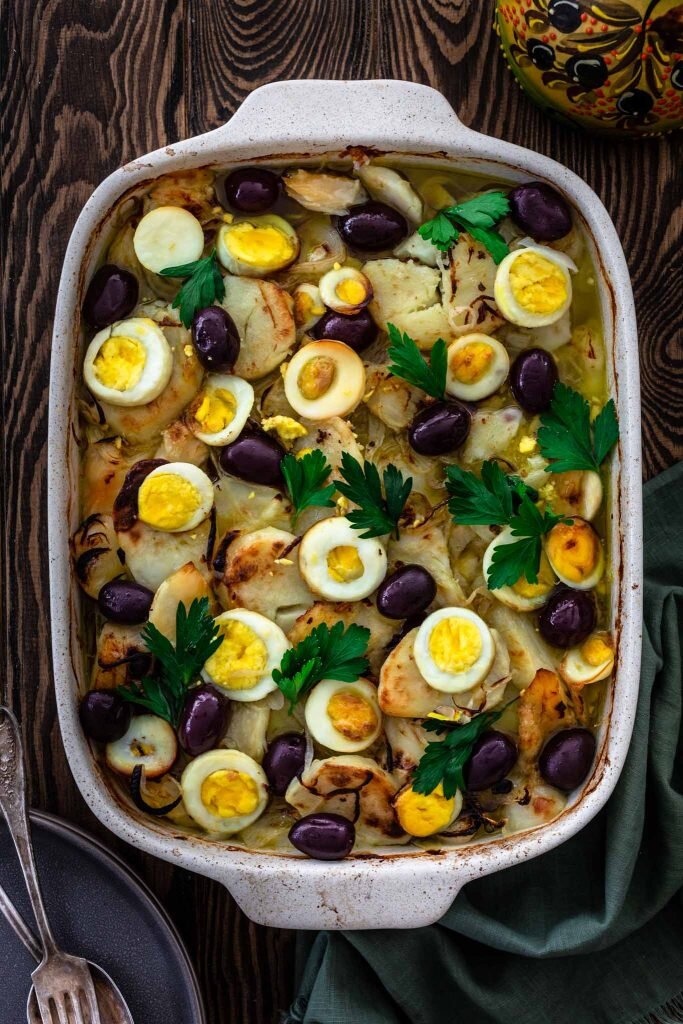
Brazil - bacalhau-a-gomes-de-sa.jpg
 

Bulgaria 

One of the most popular traditions of Easter week in Bulgaria is the making and eating of the braided loaf kozunak. This sweet loaf is made with the juice and zest of a lemon and rum soaked raisins. On Easter Sunday the kozunak takes center stage along with a feast of all the other foods prohibited during Lent. For an absolutely amazing recipe and step by step photos check out the link for Viktoria’s Table.


Colombia 


Easter both is and isn’t a large holiday in Colombia. On one hand, the entire country shuts down for Maundy Thursday and Good Friday.  On the other hand, events, feasts and the exchange of sweets aren’t much of a thing there. There is one traditional meal though and that is  potaje de la vigilia . This recipe is closer to its roots in Castille, but the recipe is still similar. The Happy Foodie has a lovely recipe for it.

 
Czech - Beranek.jpg
 

Czech Republic

While this baked lamb is the cutest recipe on here, the story behind it comes from ingenuity, making it even more special. Many times it wouldn’t be possible in the Czech Republic to get hold of lamb for the Easter meal, and so families would bake this  sweet bread in its place.

Go see the recipe for it over at Gourmetpedia.


Denmark

If you get the chance to go to a Danish Easter feast, you’ll find roast meats and herring paired with sliced cheeses and meats.  Most people pair schnaps and beer with the meal, although the breweries make a special Easter beer that is stronger than normal. You’ll also find these delicious tarteletters which are pastry shells filled with chicken and asparagus. We found the recipe for them over at Gourmand Trotter.
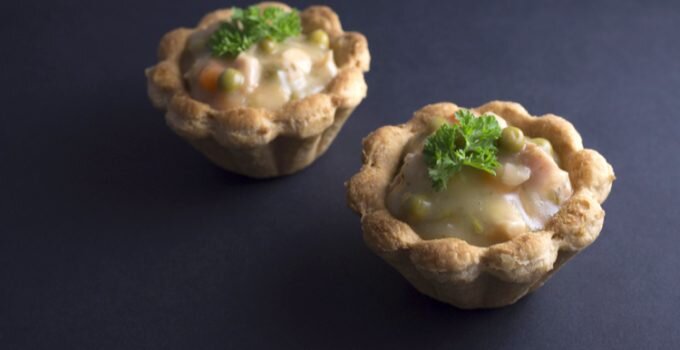

Denmark -Tartelette Danish chicken and asparagus tarts
 
England - Simnel cake with 11 marzipan balls

England 

Next up, England! Here the traditional feast is similar to others we’ve encountered, centering around roasted lamb at the center. The dessert is what we’re here for though, which is the delicious simmel cake. It’s a fruit cake that is covered over with a layer of marzipan and 11 marzipan balls to represent the 11 faithful apostles of Jesus.

Our recipe for this one comes right from the BBC where you can learn even more of the history behind this tasty cake.


Ecuador 

If we hop over to Ecuador, we’ll find another soup for our feast called Fanesca. Made from cod, beans and squash the soup originally came from Spain. The Ecuadorians have made it their own though by mixing in local ingredients  like hot peppers and Andean grains not to be found in the original recipes.

You can find this delicious looking recipe over at Laylita.

Ecuador - Fanesca.jpg
 

France 

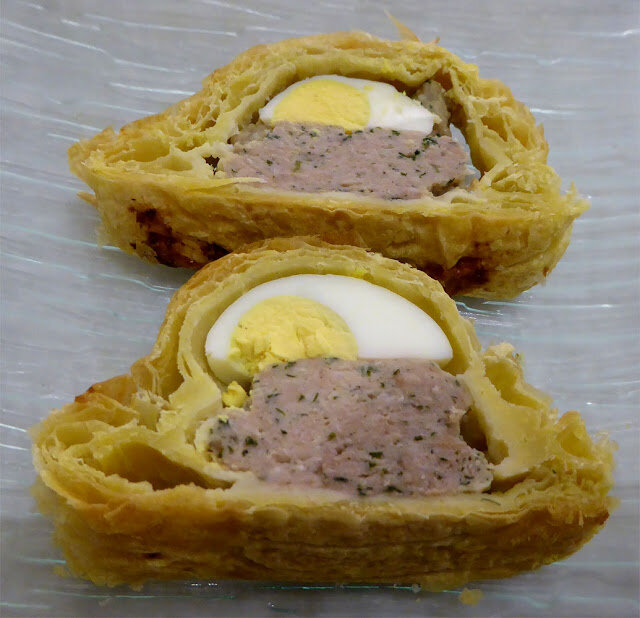
Heading back to Europe we find France where instead of the Easter Bunny they have the blessed bells. Church bells ring every day of the year in France, except for the three days of Easter. During these three days, as legend holds, they are making a trip to Rome to be blessed. On Easter Sunday the bells make their return and tour the country leaving chocolate eggs and other treats in gardens all over.  A traditional luncheon meal is Pate de Paques Berrichon, which while delicious is also equally simple to make. A dough wrapped around meat and eggs then baked, and you have a delicious lunch and handy lunch. 


Finland 

If you go up to Finland you can try out their bread pudding that’s only made for Easter, Mämmi. It’s a soft and chilled rye flour ‘cake’ that’s made with orange zest and dark molasses then served with milk or cream.  Check out the Finnish Food Girl to learn how to make this delicious treat.


Finland - mammi.jpg
 
Germany - Seven herb soup.jpg

Germany  

Although this is technically eaten on Gründonnerstag or ‘green Thursday’ before Easter Sunday, we found this recipe so interesting we had to share.  Called Seven Herb Soup, this is just one of many entirely green dishes that Germans consume on this day. Go over to Curious Cuisiniere to learn how to make your own. 


Greece

 If you’re going to Greece, you have to start your Easter feast with Magiritsa, a special soup made from lamb, dill, lettuce and onion, served in an egg and lemon juice broth. My Greek Dish has an amazing recipe on their blog. 

Greece - Magiritsa stew of  lamb
 
Italy - torta-pasqualina-easter-pie-egg.jpg

Italy  

Heading over to Italy, if seeing all of the bread arches doesn’t make you hungry, the smell of this Torta Pasqualina will. Filled with eggs, herbs and cheese, this is a dish that is sure to fill you up.  Check out how to make it over at Eataly. You can also try out the famous dove-shaped cake called colomba pasquale.


Mexico

If you make it to Mexico on Good Friday, be prepared to try out their capirotada. A sweet bread pudding that’s covered in a sugary syrup with fruits, berries, nuts and cheese, this isn’t something to be missed. Make sure that you have plenty of room for this delicious treat as you won’t want to eat anything else after you’ve had it. You can find a recipe for it over at Muy Bueno Cookbook. 
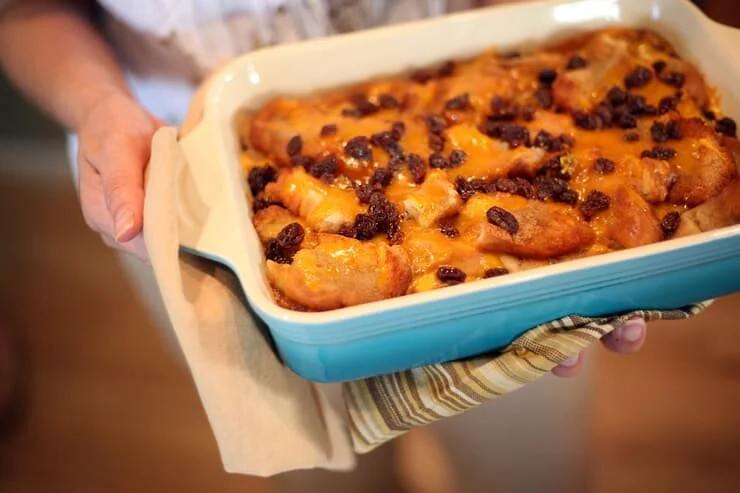
Mexico -capirotada.jpg
 
Netherlands - Paasstol.jpg
 

Netherlands

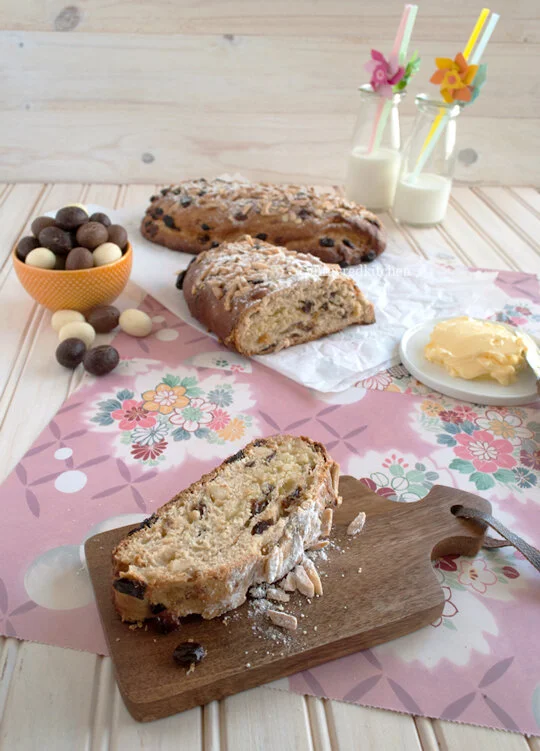
In the cold and dark of the Netherlands, family and food are what bring people together and light to our hearts before spring (finally) comes.  This means many enriched breads and pastries including paasstol. A tasty, fruity loaf that’s filled with an almond paste center it’s not to be missed. They also serve braided loaves, pumpernickel, egg cakes and jodenkoeken or buttery shortbread. Alongside these are pats of butter mouled into animal shapes, cheeses and smoked fish.  Over at In My Red Kitchen you can find a fantastic recipe for paasstol.


Norway  

Going to Norway now, a traditional Easter table is laid out with lamb, eggs, cakes, yeasted breads and more oranges than you know what to do with. The tradition of eating oranges, according to some, dates back to the when merchant ships would have brought the first of the harvest from Southern Europe during Easter. Over at Thanks For The Food, they have a traditional Easter orange cake that you can check out.

Norway - Orange cake.jpg
 

Poland 

On to Poland, to try out their White Sausage or Biala Kielbasa. This traditional meal is surrounded on the table  by rye soup, cakes with poppy seeds or cottage cheese and a very special centerpiece. A loaf of butter that has been shaped into a lamb with peppercorns for the eyes and a red bow around its neck. If you want to try out making your own Biala Kielbasa, head over to Polish Your Kitchen for their recipe.


South Africa 

Going down to South Africa, we find a very interesting take on ‘no meat for Lent.’  Here they enjoy pickled fish. Their version here is lightly curried served with onions and fresh bread.  

While pickled fish is enjoyed the world over, the South African method is unique to them. It starts with frying portions of fish that have been seasoned with salt and pepper. Separately they’ll cook a mix of onions,  and spices before adding vinegar and sugar. This mixture is then poured over the cooked fish where it is allowed to refrigerate for at least 24 hours. 

After this time has passed the fish  has achieved a delicious, sweet and tangy flavor. My Anos Kitchen has a recipe so that you can try this amazing dish for yourself.

South Africa- Pickled Fish.jpg
 
Spain -Three different Torrijas covered in milk chocolate, powdered sugar, and honey
 

Spain

Our second to last stop is Spain, to test out their Spanish Toast or  torrijas. Similar to French toast, it’s made from thick slices of bread that are soaked in milk and a beaten egg, then fried in olive oil. It’s served cool and paired with honey, powdered sugar or coated in  milk chocolate. Spanish Abores shared a recipe that she had found after her time teaching in Spain and mentions adding cardamom to the mix. Our own encounters with cardamom lead us to agree, this spice would really make your Easter dish sing. 


Sweden 

The final stop on our journey, Sweden! While many people talk about pickled herring or salmon at Easter, there is another very popular dish that we found on the country’s own website. Called Janssons Frestelse or Jansson’s Temptation, this is a creamy casserole made with potatoes, onions and anchovies. It’s usually washed down with a glass or two of aquavit. 

Sweden - Janssons Temptation a potato casserole
 

Thank you very much for checking out this journey with us! We hope that you learned something new or found a recipe to try. 

If you did, let us know over on our Facebook page? And if we missed anything, tell us that too! 

Or, if one of your appliances is acting strange, or outright broken, please give us a call. We want to help you and yours. Reach out to us by phone ((NUMBER HERE)), or you can schedule an appointment over here. ((INSERT LINK)) 

Thank you again for joining us and we hope to see you in two weeks time,  when we’ll be checking out a recipe for Soaked or Sprouted Chickpea Falafel. We look forward to seeing you then!

All  credit for photos belongs to the amazing bloggers who created our recipes this week. 

Does DIY Dish Detergent Ruin Your Dishwasher?

 Have you started to look around your home to find what you can make or do without? When things in the economy look so uncertain, many of us try to find ways to save money. 

Some people have been doing this for ages, and it's nothing new to them. For many of us though, with the shortages in grocery stores and supermarkets it seems like making things ourselves might be the way to go.  

Empty Shelves.jpg
 

Bread

Diapers

Masks 

Cleaning supplies

Just to name a few of the many. 


For many people cleaners are one of the first things to be moved over to the DIY pile. And given that you can make your own for a fraction of the price, saving you hundreds of dollars a year, we get it! 


But before you rush off to check your cabinets and get the hottest recipe off Facebook or Pinterest, take a moment to consider these facts. 


We surveyed the top 20 posts about DIY dishwasher detergents, including posts from Huffpost and The Spruce and The Kitchn.  (Scroll down to the bottom to check out the breakdown of the most common materials.) 


From looking at these recipes we found 3 major issues. 


1) Vinegar

2) Not prepping your dishwasher beforehand

3) Dish soap. 


Vinegar


Roughly 1/3 of the posts we surveyed called for vinegar. While vinegar DOES work for dissolving light sediments on your dishes, it's not the most effective for daily grime. Whether you use it as part of the detergent or put it into the rinse compartment as some suggest, not enough of it gets out to be effective for your dishes. 


On top of that, if you read our post about vinegar, then you know that it can be a serious issue. As we pointed out then, we've had many clients destroy the seals and gaskets on their dishwashers this way.  Even if you just 'use it occasionally' to clean out the grime and build up in your dishwasher, you are still cutting down the lifespan of your machine. 

 
Vinegar.jpg
 

Prepping Your Dishwasher Beforehand

Now, out of the sites reviewed, we found only 1 that suggested preparing your dishwasher prior to switching over. As Heather of Mommypotamus points out, 

     "It's important to clear away mineral deposits and or other residue from your dishwasher. Otherwise the citric acid will loosen them, and they will redeposit on your dishes."


"Aha," you say,"I just won't use citric acid, problem solved!" 


Except if you look at our list again dear friend, you'll see that 17 of the 20  sites we checked called for citric acid either as part of the detergent recipe or as part of the rinse aid paired with it as Heather does. 


And with good reason. While the commercial detergents have enzymes to break down food, grease, and grime, citric acid does the same. It also suspends the sediments i the water, preventing them from settling back on the dishes. 


So if you /do/ want to go homemade, your best bet is going to be using citric acid as part of the recipe. 


Dishsoap.

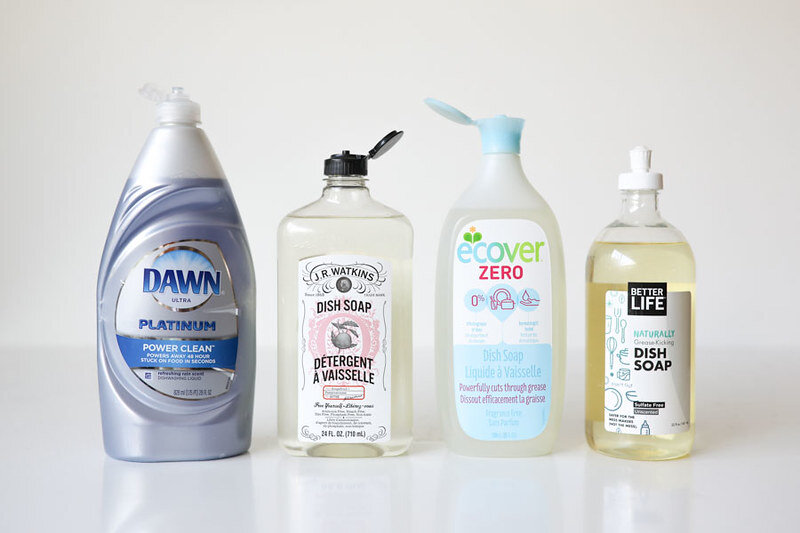
It makes so much sense to use it. If you can use it for your hands or washing things in the sink, why can't you use it in your dishwasher? Even Huffpost used it! 

Because, quite frankly,  there's a host of problems with using it. 


No matter the amount you use, it cuts down on the amount of cleaning your dishwasher can do. According to Travis Robertson of Sears, over on The Kitchn, any amount of dishsoap is going to create suds. Even if you don't see them spilling out, they are there. 

This means that

- Your dishwasher can't spray or circulate the suds the way it would a water and detergent solution. 

 -  The suds are likely to create a film on your dishes and WILL create one inside your dishwasher. the suds are difficult to flush out, no matter the age of your dishwasher, so it sits and builds up. 

  - It all boils down to the same thing according to Robertson "lots of suds and no wash action." 


Dish soap works as well as it does because of the mechanical motion of washing by hand. Because your dishwasher doesn't have that type of motion, it's not effective. 


On top of that, with build up inside the washer, or if it leaks because of the amount of suds, the gaskets, synthetic parts, seals and plastics can all be damaged. if that happens, you can very easily void your warranty, which means you'll be paying for all repairs out of pocket. 


If you look at our graph, you'll see that only 2 of the sits surveyed suggesting using dishsoap. This is only representative of the number of sites that listed it as an ingredient, not the ones that suggest to use it on its own as a replacement. 


"So is there any hope for doing this? Or do I have to give it all up?" we hear you crying. 


Fret not! You still can use DIY recipes, such as the one over on Mommypotamus.  There are just a few precautions that we suggest taking. 

- Avoid any recipes that call for vinegar or dishsoap. 

- Make sure that you ONLY use as much as is needed. Just like with commercial detergents you CAN have too much. 

 - Be sure to prep your dishwasher before you make the switch. 

- Keep notes. Not only is every dishwasher different, but you also have to consider how hard or soft your water is, and how much food you leave on your dishes before putting them into the machine. All of these things will affect the dishwasher and determine which recipe is going to work best for your family. 


So yes, it can be done, but it might be a process to find exactly what works for you. 


We want to hear from you. Are you making anything at home in light of the Stay At Home order or just because groceries have run short? Have you used your own dishwasher detergent in the past? How did it work? Let us know over on our Facebook post! Help us share effective ways to cut back on costs so that all of us can benefit in these strange times. 


Remember, if your dishwasher is giving you trouble and you live in any of the areas we service let us know! We're still here for you and we want to help. You can click over here and schedule an appointment today. 


Most Common Ingredients In DIY Dish Detergents.png

Irish Lamb and Sweet Potato Shepherd's Pie

Now that you’re through gorging yourself on all of the fake Irish food (or maybe you aren’t - we’re not going to judge if there’s still some corned beef in your freezer), we wanted to share something more authentic. We hunted high and low and found one that we enjoyed and wanted to share.

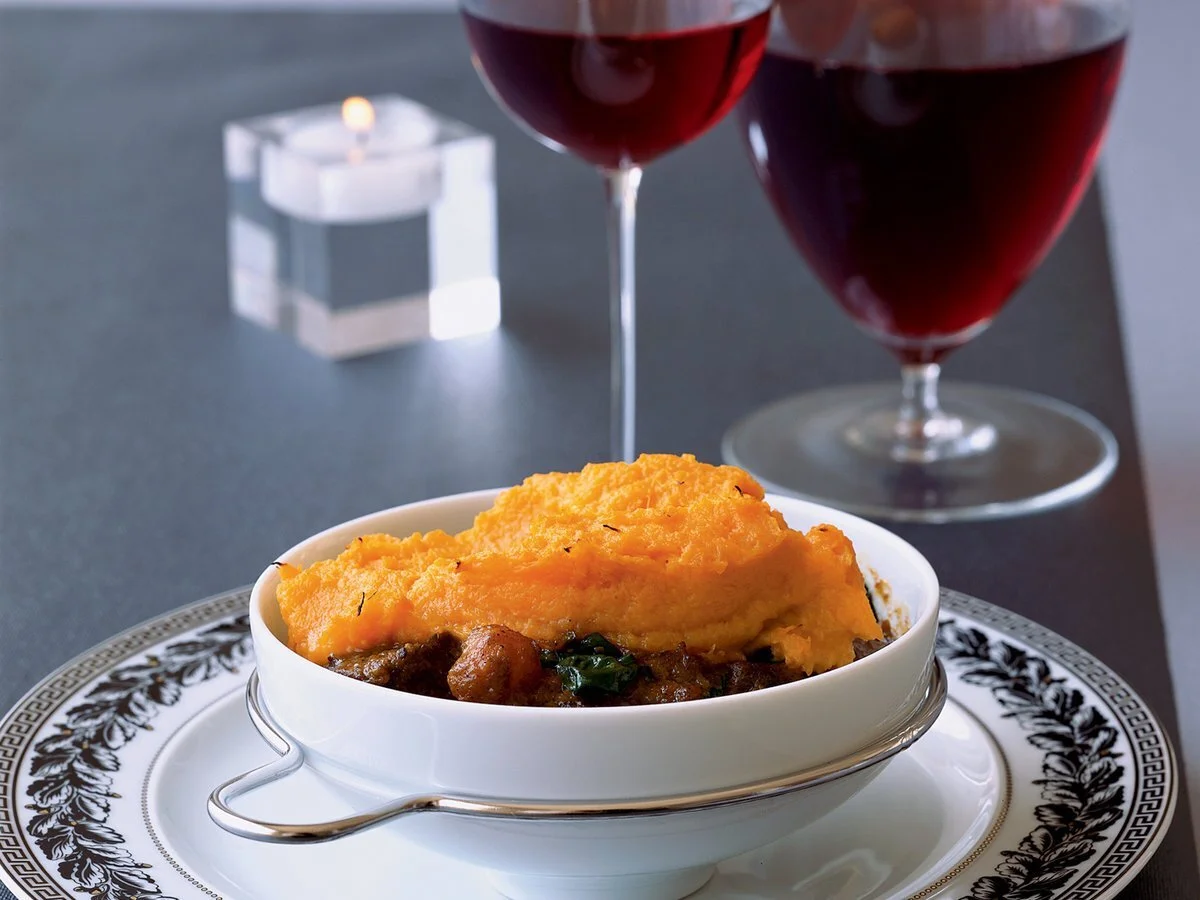
Lamb and Sweet Potato Shepherd’s Pies.

We started with a recipe from Food and Wine, and modified it as needed for our tastes. Feel free to tinker with it for your family as well. This is a meal to pull out when you want to impress people - or when you just feel like having something out of the ordinary. 

Fair warning: if you do not like lamb, please do not attempt this recipe at home. We would hate to disappoint.  

As belated as this might be, here’s a meal from our table to yours. 


© Dana Gallagher

© Dana Gallagher


Time from Prep to serve - 2 hours and 30 minutes. 

Time you’re working -  40 minutes 

Serves Four 

Ingredients

  • 3 tablespoons extra-virgin olive oil

  •  2 pounds boneless lamb shoulder, cut into 1/2-inch pieces

  •  Salt and freshly ground pepper

  •  5 garlic cloves, minced

  •  1 large onion, finely chopped

  •  2 carrots, cut into 1/4-inch dice

  •  1 1/4 teaspoons ground cumin

  •  1 1/4 teaspoons hot paprika

  •  1/2 teaspoon ground allspice

  •  1/4 teaspoon turmeric

  •  1 1/2 tablespoons all-purpose flour

  •  3 1/2 cups water

  •  5 cups baby spinach 

  •  2 pounds sweet potatoes, baked and peeled

  •  1 1/2 ounces soft goat cheese

  •  1/2 cup milk

  •  1 tablespoon unsalted butter

How to Make It

Note: Before you cube your lamb, take the time to whack it some. This breaks down any connective tissues and helps to bring out the flavor later on. 

Step 1

Gather your necessary supplies. For this recipe, we would suggest an enameled cast iron casserole or a good Dutch oven. You’ll also need four small ceramic baking dishes, about the right size for a single serving each.

Step 2    

Over medium heat, warm 2 tablespoons of olive oil till shimmering. Raise the temperature to medium high. Toss the lamb with salt and pepper. Working in batches, cook until the lamb is browned on all sides. Transfer the lamb to a shallow bowl as you finish each batch. 

Step 3    

Add your remaining tablespoon of olive oil to a casserole dish along with the minced garlic and onion. Turn the heat down to medium and cook till the onion is soft and translucent. Add the carrots and other spices, stirring constantly, until fragrant. This should be roughly two minutes. 

Step 4 

Add the flour to the casserole, and allow it to become lightly golden before you add the lamb and water (congratulations, you’ve just made a roux!). Bring to a boil, stirring occasionally. 

Step 5

Reduce the heat to low, and simmer uncovered, stirring occasionally until sauce has thickened and the lamb is tender. This step will take roughly an hour and a half. Grab a book or an episode on Netflix while you wait! 

Step 6

Bring the heat back up to medium-high and stir in your spinach until it wilts. 

Step 7

Dish the stew into your 4 shallow ceramic baking dishes. Each one should hold roughly 2 ½ to 3 cups. 

Step 8

Preheat the oven to 425*. In a medium saucepan, mash the sweet potatoes over high heat until warmed through. Mix in the goat cheese, milk and butter, then season with salt and pepper to taste.     

Step 9

Spread the mashed sweet potatoes over the lamb stew and bake for 10 minutes, or until the edges are bubbling and the entire thing is hot.

Step 10 

Preheat the broiler. Broil the dishes 4 inches from the heat for 1 minute or until golden. Serve at once.

What did you get up to for Saint Patrick’s Day? Did you do anything? Do you have any recipes that you’d be willing to share? Let us know over on our Facebook, we’d love to talk with you! 


Remember, if your oven (or any of your other major appliances) starts giving you trouble, schedule an appointment with one of our techs today. We’re always here to help, and we’d hate to hear a cranky appliance has stalled your culinary journey.


Coming to a computer near you for the next major holiday: Easter feasts from around the globe! If you have one that you’d like to suggest or share, let us know either in the comments or over on our Facebook! 

What is An Air Fryer and Does It Really Work?


Can you tell us what tastes better than french fries? Or donuts? What about fried chicken? 

There's something about frying that makes your brain just go 'yum'. But... it's not particularly healthy is it? All that oil makes it very easy to gain weight even when you're careful about what you eat. And let's not even talk about what it can do to your heart. 


berliner-17811_640.jpg
 

This conundrum of "yum" vs "wanting to stay healthy" has been a problem since we first discovered that all of the delicious foods could clog your arteries. People have tried everything to keep the delicious flavor and still stay healthy. 

Air fryers are the latest attempt by the appliance industry to give us the foods we want, while still maintaining some semblance of health. 


We had a bunch of questions though and set about trying to answer them. 


What is an air fryer and how does it work?  

Do they REALLY work? 

Are there any rules to using them?

Should you get one?


Feel free to click through to your most pressing answers, or keep reading to get to all of them. 


First up, what is an air fryer? 

An air fryer is, at its most basic, a small convection oven with the footprint of a five gallon bucket, and the ability to cook, at most, a 2.5 lb chicken. (Which is actually really small if you look it up.) The food is placed in a  wire mesh basket, and the air is rapidly circulated around the chamber, allowing the food to cook approximately 20% faster. 


Air fryers can also be used with a variety of different accessories, from cake pans, to pizza pans, to griddles which expand how useful it is, provided you do the additional research for using those extras properly. 

air fryer.png


Do they REALLY work? 


Yes, they really do. The trick though, after extensive reading and polling people, is that just like any other tool, there's a learning curve. You need to be willing to research the particular quirks of your machine and what's needed for the best outcome. Yes, we know it means you can't just plug it in and start having fun. It bites. BUT the good news is that you can make those delicious doughnuts and not have a guilty conscience? Does that help? (It did for us. Hence why this post is so long.) 


Not everyone agrees on whether air fryers work or not, but we think that the biggest issue there is that not everyone is taking into account a few rules that you need to follow for optimum working conditions. 


So what are the rules? 


You use too much oil / You use too little oil

Let's start with the biggest one. If you use too MUCH oil, you're forgetting the basic principle that this is an 'air fryer' not a 'deep fryer'.You don't need to soak the food in oil for it to get the crispy exterior. By the same token. you do need a little bit. (We suggest a quick spray of your favorite oil using something like a misto.) We think that's the majority of what went wrong with WIRED's testing of their air fryer.  While you can get a crunchy exterior just using the air fryer without any oil, at that point you're using it like a convection oven, not allowing the air and light oil to circulate around the food. 


You don’t preheat the air fryer

Yup, just like every other cooking appliance, your air fryer does need time to heat up. It does take less time than your traditional oven, but it needs that heating time all the same. 


 Your air fryer isn’t getting any air

If you have your air fryer crammed onto the counter, surrounded by different things, how is it going to pull air in? Answer, it's not. Without external air flow, the air fryer cannot work. So make sure it can breathe


You cook in the air fryer without cleaning

You wouldn't cook in a frying pan without cleaning between uses, treat your air fryer the same way. After you're done using it for a meal, clean it up and you'll be good to go for next time. Otherwise things can get into the heating elements, burn and then your kitchen, and your food is going to be smelling horrible. Not fun! 


The foods are too wet

If your food is soaking wet or covered in a drippy batter when you put it into the air fryer, it's going to run into a problem. Much like having too much oil, the fryer isn't going to be able to 'breathe' so to speak and it'll be more like steaming your food instead of 'frying' it. 


spinach-2216967_640.jpg

 The foods are too light

If you're trying to cook foods that are too light, say spinach leaves or something similar, they can float around. The rapid air circulation in the oven will cause things to go all over the place. 


 The food is too small

If you're working with the mesh basket rather than one of the attachments, it is possible for food that's been chopped too small to fall between the gaps and end up getting burned. To avoid this, just shake the basket over your sink or garbage can to make sure nothing falls out. 


You don’t check the food’s temperature

This is more of a food safety thing than anything. An air fryer is still cooking your food, so you still need to check the temperature of all foods before you eat them, especially if you're dealing with meats. 

You put too much food in the basket

Much like the outside of your air fryer needs space to allow it to pull in air, the inside needs space for that air to circulate. If you cram the basket full of food, the air isn't going to circulate properly and you're going to end up with something inedible. 

Should you get one? 

We think that for those with small apartments, or if you're living in a dorm, a good air fryer is a solid investment. Especially if you're willing to do the research and get a multi function one, this can easily replace a majority of the major kitchen appliances, without having to take up a ton of space. If you are going to get one, make sure that you buy the one with the best reviews, and that is large and durable. You'll want it to stand up to time and regular use. 


If you're just wanting one to try out the process, or to be part of the fad, (which is fine, we still don't judge ;) ) then go ahead and get a smaller one. You wouldn't want to purchase one with all the bells and whistles if you aren't sure it's something you'll use regularly.


Are you going to take the plunge and test out an air fryer? Do you have one already and have recipes you’ve mastered? Let us know over on Facebook! 


And if your other appliances are having issues give one of our techs a call and we’ll be happy to help! 


What Does Energy Efficient Even Mean?

Hand on top of bills next to calculator

Why is it that every time you turn around your electric bill seems to be creeping higher? While we could go into energy resources, global resistance to renewable energy, inflation,  yadda yadda, let’s address something simple that all of us deal with. Our appliances


Yup, your appliances. Your appliances account for between 10 and 30% of your yearly electric bills.  And if they aren’t cared for, maintained and repaired regularly? That amount can go even higher. There are ways around that though, including purchasing energy efficient appliances, helping your current appliances be more efficient and making other small changes around the home. 


But what does energy efficient really mean? 

When people say ‘energy efficient’ they’re meaning that the appliance in question uses less energy to get the same amount of work done. So if you were to compare the non-efficient dryers to the efficient ones, you’re going to end up with fewer kiloWatt hours used for the same amount of time and the same load of laundry. 


Fortunately, there is a way to easily find appliances and other household items that are energy efficient. 

You’ve probably seen that big blue label on boxes at the appliance store, or in bold letters: ENERGY STAR. Or seen it advertised next to computers, dryers and lightbulbs CERTIFIED BY ENERGY STAR, as part of the list of features. These appliances have been developed and tested to the Energy Star standards. 

Energy Star is a program that’s run by both the Environmental Protection Agency (EPA) and the Department of Energy(DOE). It was developed in 1992 to promote and develop energy efficient policies, procedures and products.   An appliance that has the Energy Star label on it is one that has been tested by their scientists and been found to save energy, money and to reduce the carbon footprint. 


According to their website, what makes a product worthy of the Energy Star label is the following: 

-Certified products must deliver the features and performance demanded by consumers, in addition to increased energy efficiency.

-If the certified product costs more than a conventional, less-efficient counterpart, purchasers will recover their investment in increased energy efficiency through utility bill savings, within a reasonable period of time.

-Energy efficiency can be achieved through broadly available, non-proprietary technologies offered by more than one manufacturer.

-Product energy consumption and performance can be measured and verified with testing.


-Qualified refrigerators are at least 15% more efficient than the minimum federal efficiency standard.

-Qualified TVs consume 3 watts or less when switched off, compared to a standard TV, which consumes almost 6 watts on average.

-Office equipment that qualifies automatically enters a low-power "sleep" mode after a period of inactivity.

-Qualified light bulbs (CFLs) use two-thirds less energy than a standard incandescent bulb and must meet additional operating and reliability guidelines.

-Qualified furnaces offer a rating of 90% AFUE or greater, which is about 15% more efficient than the minimum federal efficiency standard.

What changes are there that make an appliance energy efficient? 

All sorts of changes have been made to appliances over the last 30 years, working to make them more efficient. For many this means better sensors and insulation to keep temperatures at the needed levels and seal them in properly.Refrigerators for example are becoming better at sealing in cold over the last few years with a change in their insulation. Others change how much water they use and how it’s heated.  Washers, for example, have been engineered so that they use approximately 25% less energy and between 70-75% less water per load. 


What does that mean for you

Like we said above, your appliances can account for roughly 20% of your household’s yearly electric costs. By replacing older models you can save between 10% and 50% of the energy you were using before, depending  on the models. “Households are saving hundreds of dollars annually as a result of increasing appliance efficiency standards,” says Shannon Baker-Branstetter, the senior energy and environment policy council at CR. Buying one major energy efficient appliance can save you over $100 in a year. The more appliances you buy, the more that number goes up. 


If you can’t replace, or you want to do more research, you can still cut back on your energy bill in unexpected ways. 

-Wash your laundry on cold rather than hot, and consider throwing a dry bath towel in when you dry them.  (This lets your clothes move around more easily and helps them dry faster. )

-Check around all of your appliances for dust or lint. Having blocked ventilation areas is an easy way for an appliance to overheat and thus draw more electricity. 

-Unplug! If you have appliances you only use once a day (say your toaster or coffeemaker) unplug them. Most models, especially older ones, will still draw power even if they aren’t turned on. 

-Set timers for devices such as tvs and computers so that they shut themselves off at night. 


These days more and more Energy Star certified appliances are being created over non-certified ones. While it used to be that you had to pay a high price by comparison, these days it’s possible to save money on the initial purchase and over time. If you’re looking to keep your current appliances for the time being, but would like to give them a check up, schedule an appointment with our technicians. We’d love to help you cut back on your energy bills.