2000s Kitchen Decorating Trends That Overstayed Their Welcome

Have you ever flicked through old photos or magazines and wondered 'who in the world thought that trend was a good idea?' We know we have, which is why this week we're taking a look at the kitchen trends of now and then, focusing on the design choices of the early 2000s. (We know, it's weird to us to think it was 20 years ago too.) 


Mason Jar Decor

Lighting, candles, soaps, storage, mason jars have been everywhere and used for everything. 

They were affordable, easy to come by and you could buy them in bulk. Not to mention once you were done with the food inside them, you might have to wait a while before you could fill them again, so you needed to use them for something, right?  People got creative and found all sorts of ways to use these staple items. It was great! And then it became overwhelming. You couldn't pick up a magazine or open up Pinterest without seeing at least one 'innovative, new way to use mason jars!' 

Fortunately a shift towards handmade wares seems to be growing, meaning that mason jars might have to move out of the spotlight.


Granite everywhere! 

Backsplashes, counters, and anywhere else designers could put it. Granites are so busy when you have them all over your kitchen, and combined with the thick cuts, it led to kitchens feeling very dark and confining. 

Fortunately, today's trend is all about marbles or smooth expanses of a single color. Both of which can be obtained with some contact paper


Ferns 

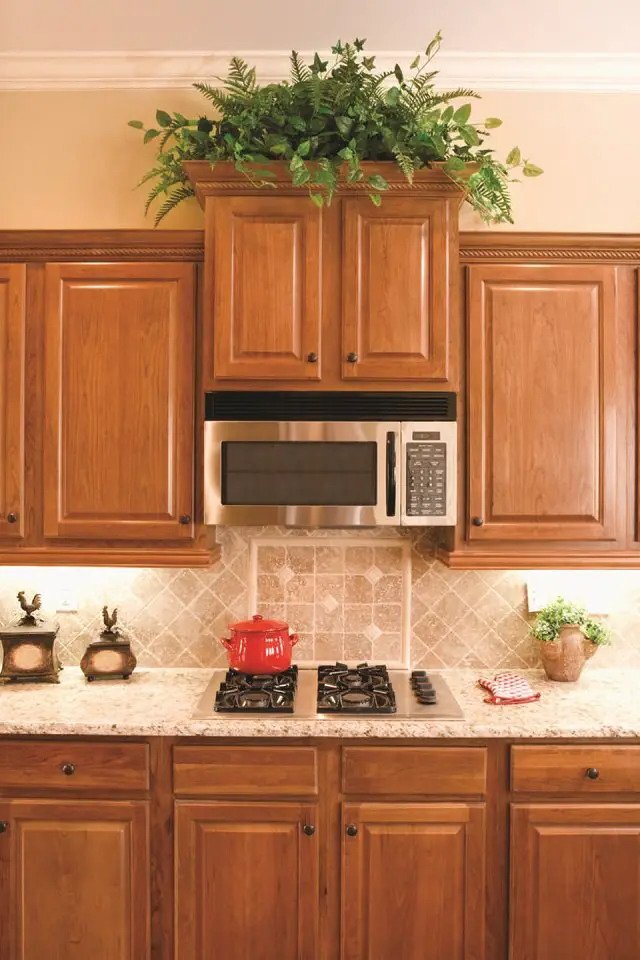
Ferns were the plant in the 2000s and really, it’s not a terrible trend. They bring a lightness to a room if you take good care of them. Unfortunately, most people didn't. They're finicky plants and they do shed... a lot if you're not careful. So when succulents started to enter the spotlight in 2009 or so, ferns were ushered back into the offices and waiting rooms. 


Stainless Steel Everything

Sure, most appliances come in stainless, but there’s no need to have it floor to ceiling. Which is what the 2000s did, even going so far as to have all of the appliances in one long line so that you had a wall of stainless steel when you stepped into a kitchen. Mix things up and check out different options! You can use contact paper to get wild or purchase ones that come in different colors like these gorgeous ones from SMEG


Accent Walls

Can they be done right? Yes. Were they? Not really. 

Ok, that's not fair. There were tons of magazines and interior designers that pulled off this look flawlessly. For the majority of us though, we'd try and use a cool color in a  room full of warm furniture or vice versa and it just never worked the way it was supposed to! 

   This is still a trend surprisingly, but it's being done more cautiously. Instead of going with bold, eye catching colors people are choosing colors that already exist within their decor and using that for the accent. 


Stark Black and White 

This was a trend, and we’re not entirely sure why? It can be very disorienting to have everything in just two colors with no variation or places to rest the eyes. 

        It makes us think of high concept music videos or something, and really, we're glad this one has stayed in the past. Not to mention how difficult it is to keep stark blacks and whites clean!


‘Rustic’ Kitchens

Roosters and oil paintings, as far as the eye can see. It was a frightening time full of reds and yellows that didn’t really work well together.  Rustic is a great aesthetic, and it can be utterly beautiful, but really, you can only have so many roosters in one kitchen. This one has stuck around surprisingly, but it's expanded out to include reclaimed woods, shiplap, and a broader range of colors. 


Tuscan Kitchens

    Our last one .. is hard for us to admit. Who wouldn't love to wake up in a villa in Italy? (Especially now that they're welcoming tourists back.) The problem wasn't that the design was bad, it was that it was reduced down to components, individual pieces that people would try to smash together without caring how they worked or why. It was boiled down to faux paintings, travertine tiles, more granite, and terra cotta floors. This reduction process left our kitchens feeling dark, gaudy and entirely tasteless. 


Today's focus in the kitchen is on light, airy spaces. Windows dominate and everyone wants to have white EVERYTHING.Pendant lights and statement backsplashes add to the feeling, showing off your personality. Herringbone is taking over where subway tile previously reigned supreme, bringing in a twist to the world of tiling. How long will these trends last? We don't know, it's only the beginning of the decade after all. 


Let us know what you think about trends of now and then in the comments here or over on our Facebook page, we'd love to hear from you! 


If you're having trouble with some of your appliances you can reach out to us here or via phone ( (214) 599-0055) so we can help. 

Remodeling Your Kitchen Guide: Part Two - Inspiration, Features, & Layout

We’re back again ladies and gents to discuss the process of renovating your kitchen. This time we’re talking about inspiration, features and layout. Or, you can think of it as “Ooh shiny”, “what matters” and “how do I fit this in here?” 


Last time when we were discussing budgeting for your dream kitchen, we had you make a list of everything you wanted to do, and pare it down to what you could afford. Grab that list and take a look at it now.


Inspiration 

Depending on how specific you were, you might not need to consider your inspiration. You might already know exactly what you want the final product to look like, if that’s the case, great! Skip down to the next section. 

Rack of home remodeling magazines


If you’re not that lucky, that’s ok. Head over to Pinterest or your local big box home improvement store and take a look at their magazines. You want to look around at the current trends and see what catches your attention. Put together either a board in your home or online of different things that appeal to you. 

Some great examples are here, here and here


You want to see if there is a unifying theme to what you want, and how it can all fit together in the space that you have.  This is the point when you might consider talking to any friends that do interior decorating, or just have a ‘flair’ for it, if you really can’t figure out what you want. 


Have you built a huge list of ideas? Are you contemplating paint colors? 


Yes? Alright, now we go back to that list. Take what you have put together and sort it into two different piles - “Now”  and “Later.” The now pile is everything that you can afford to do right now, or on the timetable that you’ve set. Later is everything that will come down the road.  If your budget only extends toward a new floor and ceiling lights, that’s fine. If it stretches the other way and you’re looking at redoing everything, that works too.  This step is meant to help you narrow your focus to what is doable, rather than fretting over say, what new cabinets you should install if those aren’t in the budget. 


Features 

Now we’re going to look at things in a different light. We’re looking at you and your family, and how you /use/ your kitchen. This section is for the people who intend to redo the whole space or rip out walls. 


Grab a new sheet of paper and a pen, because you’re doing some brainstorming. For all of our questions, substitute whoever in your family spends the most time there. 

Do you  do a lot of cooking from scratch? 

Do you entertain often in your kitchen? 

Do you dine out most of the time and want a kitchen that’s more for show than for serious cooking? 

Are you the busy family provider, with limited amounts of time to cook? 


Each of these is going to affect what you need for your kitchen.

If you’re the Serious Chef 

You’ll probably be focusing on the quality of your appliances, bright light, and easy to clean but super durable surfaces to work on. You want a kitchen where you can easily lay your hands on what you need, have the space to work and not have to worry about something breaking in the middle of a new dish. 

If you’re the Social Butterfly 

You’re going to want premium cabinets, lights, a large island to gather ‘round and a wine fridge. You want your kitchen to shine as much as you do while you’re hosting dinners and having people over. 


If you’re Family Provider

Your focus is going to be on durable, easy to clean cabinets and counters, as well as lots of counter space. You want to make cooking and clean up as easy as possible, since your life is already busy enough. 

If you’re the Occasional Cook

You’re going to want to go for stylish appliances that are within your budget, a versatile island and stylish cabinetry that won’t break the bank. You want it to look nice, even if you aren’t in there much. 

And if we’re wrong about these? If you want the big oven, even though you only cook occasionally, or you’re the family provider and you still want that wine fridge, no worries! These are just some ideas of where your focus might lie, not a concrete game plan. 


Layout

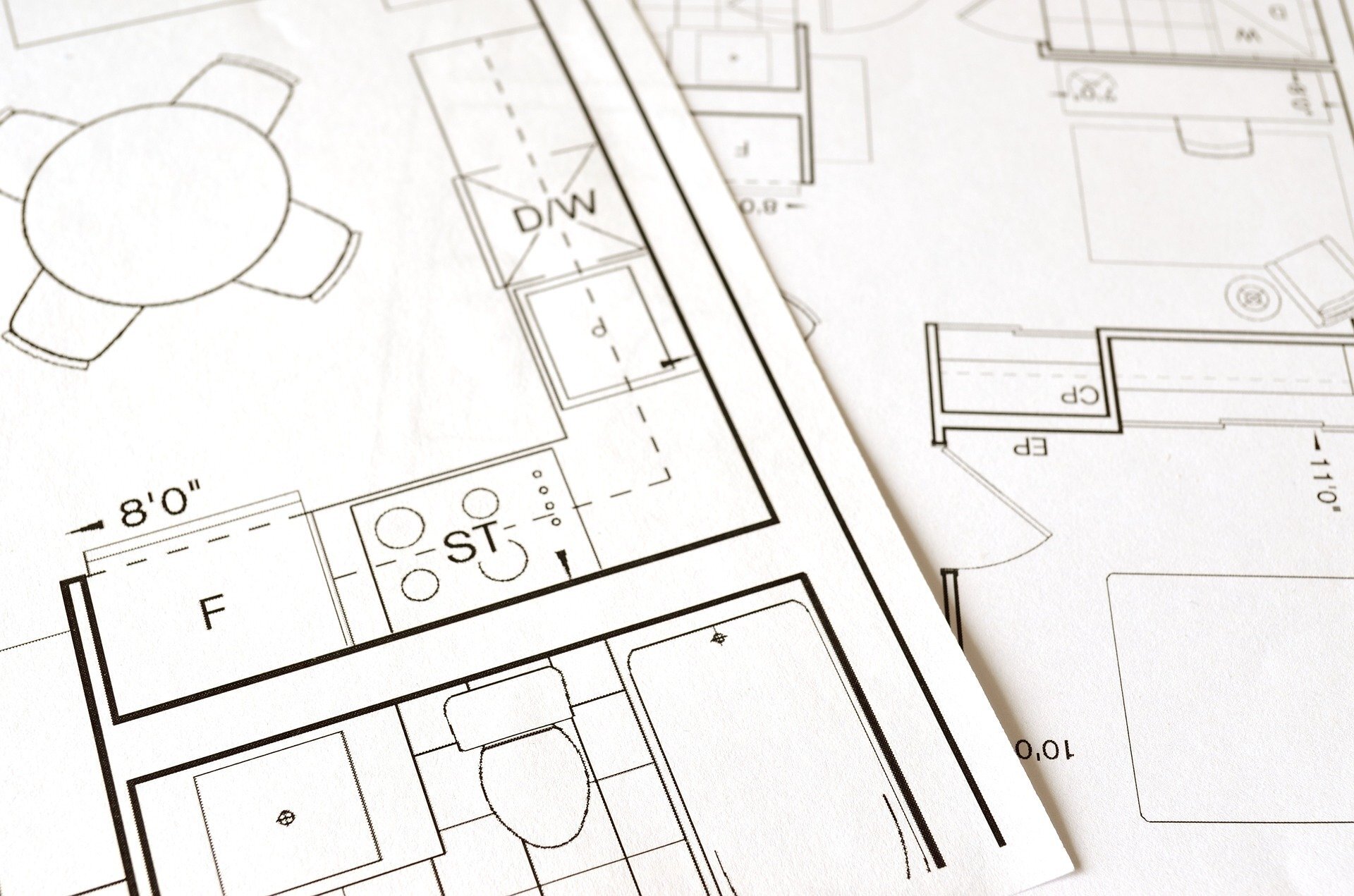
Blueprint sketches  with measurements

Last, but not least, take a look at your kitchen. Go in and look at just the walls and the floor. Where is everything? Can you see the shape of the room? Now consider what you have to add back in for it to work as a kitchen, and what you don’t want to change, or can’t change just yet. 


Are you keeping the walls where they are? Or do you plan to move them? Are you thinking about ripping out part of a wall to make room for a half-wall table?  What about the cabinets? Do you want to replace those? If so, do you want the layout the same as it is now, or do you plan to change things to make more room either for cabinets and counter space or for new, larger appliances? If you’re moving cabinets around, you might want to get a tape measure and some more paper to sketch out how much space you have to work with. 


Sinks and your dishwasher are up next. These are harder to move, but not impossible. You need to make sure that when you’re charting out a new kitchen plan that you take these into account because of that fact. 


Appliances are our last thing to consider. If you’re replacing the ones that you already have, you’ll need to make sure you have the measurements and that the ones you want are the same size. If you’re moving walls or cabinets, you still need to know how large they are so that you leave enough space in your design for them. Equally important is making sure that you note where your electrical outlets are on your chart so that they can be reached either for additional tools or for your appliances. 


Thanks for coming! We’ll see you next time when we talk about the DIY Timeline. 


If you have questions, comments or concerns, reach out to us on Facebook! We love to hear from you and what you have to say about the blog. 


Don’t forget, if one of your appliances isn’t working right, we want to help you keep your home up and running! You can click here to schedule an appointment or call us at (214 599-0055) to set one up.  We want to take care of all of our clients in Frisco and the surrounding areas.

What to Know BEFORE You get a Pressure Cooker

Guaranteed you’ve seen people talking about pressure cookers. We know, we posted about them just last week. Most people love them. They rave about how amazing they are and how they’ve changed their cooking habits because of it. But, what about the things they don’t talk about? Or if you’re looking at getting one and want to know more about them before you go all in and spend $200 on a tool that might just end up taking up space. We’re diving into what you need to know before you hit that shiny ‘buy now’ button.  


Before we dig in, just what is a pressure cooker? Sure there are tons of different name brands, and these days many of them have 3 billion different functions. A basic pressure cooker though, that is a pot with a lid that you can seal and lock into place. The pressure within the pot is controlled by one, or multiple, valves that trap steam inside the pot.  

If you want  to learn more about pressure canners and cookers and their history, check out this article over at Foodal. They go into how the pressure canner and cooker got started and why so many of us have stories of  them exploding. 


It takes time and a lot of research 

As with any new piece of equipment, it takes time to learn about it. Read the manual end to end, and then once more for safety’s sake.  The booklet that came with your pressure cooker is not only going to be your best friend, it’s also going to keep you safe. On top of that, finding what ways you  can use a pressure cooker for your family is going to be different than anyone else. Some people use them just to cook components for a meal, some people use them to cook the entire meal. Figuring that out is going to be a labor of love. (As many people have pointed out, make sure to have a backup meal and keep notes as you go. ) 

Things to try and figure out ahead of time:

What would you use it for most? 

Size- They come in everything from a 3 qt size to a 12 qt size. Consider the space in your kitchen as well as the space in your sink. (Nothing is worse than trying to clean a pot you can’t fit in your sink in the first place. 

Functions - What functions do you want on your pressure cooker? 

Brand- While we don’t normally suggest specific brands for small appliances, we know that people do have brand loyalty, and that some brands are more trustworthy than others. Consider this when you’re doing your research. 

There are many different brands out there, and you don’t want to waste money getting one that doesn’t fit your needs. 


It’s less a question of ‘can I cook it’ than ‘should I cook it’? 

The internet is full of curious, wonderful, inventive people. They’ve found all sorts of things that you can cook in a pressure cooker. The question comes down to should you. Will you like it, will it taste good? We don’t have all the answers. What we do know is that all sorts of things have been discovered to be possible and that it’s up to you to find out if they work for you and your family.

The ‘exploding pressure cooker’ has become  a thing of the past, mostly. 

We say it this way because there are two things that no amount of engineering can get rid of. 

  1. Accidents happen. Distraction, clogged seals, overfull pot, all of these things can contribute to having a lid go flying. 

  2. People have heirloom pots. You know the one that your great grandmother passed down? Yeah. They work great, but if you’re not paying attention, they are far more likely to go off than the more safety conscious ones of today. 

It will continue cooking even after you turn the heat off. 

As with all foods, unless you stick them into an ice bath immediately after removing them from the heat, they are going to keep cooking. This is especially true for pressure cookers, both of the stove variety and the electric variety due to the pressure. As Clotilde of CnZ points out, consider removing yours from the heat a few minutes before the recipe is officially done cooking. 


The cooking time doesn’t begin the minute you turn on the pot. 

Like cooking in the oven you have to let the pot reach the ideal temperature and pressure before the actual cooking time begins. It’s a small thing but one we wish we had known for our first cooking attempt. 


You don’t only clean the pot, you also need to keep the sealing components clean. 

It’s not enough to just wipe down the surface of the sealing components and be done. Today’s kettles are built so that if all of the pieces don’t align properly, the unit won’t pressurize at all. It’s a safety feature, but one that means you have to be very thorough in what you’re doing. 


You might not like it. 

Even after everything. All the researching, all the testing. You still might not like it as was the case for Rachel, the blogger of Feast and Farm. That’s ok! As she points out, there are other ways to cook fast meals and not lose out on the flavor. 


So, do you think that you’ll still get a pressure cooker? Let us know in the poll over on Facebook, we’d love to hear from you. Remember that if your larger appliances are giving you trouble, reach out and we’ll be happy to help. We want to help all of our clients in Dallas and surrounding areas to keep your homes running in tip top shape even during this chaotic time.

The History of Tile in 5 Stops

Look around your kitchen or bathrooms, or those in magazines, and you're likely to see tile of one variety or another. Used to bring color to a room, to draw your eye around a space, or just to create a stunning mosaic, tile is a versatile decorative art.  Today we're going on a tour around the world, exploring some of the oldest and most beautiful examples of ceramic tile work. We'll travel around the globe to Mesopotamia, Egypt, China, Rome and Byzantium.


Ancient Mesopotamia 12,000 BCE

Currently the oldest known glazed bricks (the predecessors to tiles) are those in the Elamite ziggurat of Chogha Zanbil. These date back to the 13th century bc. While they were 'only' glazed kiln fired bricks, it's still the oldest example of advanced pottery that archaeologists have found. An amazing example of this is the Ishtar gate that's been partially rebuilt at the Pergamon museum in Berlin. It's thought that the kiln fired bricks (an upgrade from sun-dried bricks) were developed as a protective outer coating for the more important buildings. Examples here include temples, gates, walls, and palaces. On top of being more easily decorated, kiln fired bricks were also extremely durable and made the structures stronger. (Just think how far we've come! From making buildings more durable to decorating our homes! Although those bricks would still be nice if you were building a custom outdoor kitchen. )


Egypt: 4,700 BCE

Photo Belongs to Hannah Pethen

Ancient Egypt is our next stop on this journey, as it's where tile work seems to have originated. The technique is called "faience," and it can be either translucent or opaque. Made of sand or crushed quartz, it was primarily used to bring shades of green, blue and turquoise to pieces. Tiles spread from being used to coat the homes and tombs of the wealthy to also being used for pottery and jewelry. (Of course the pieces were much smaller when they were used for the latter two.) We think these tiles would be amazing in the bathroom, and so soothing as well.


Rome: 200 BCE

In Rome we see something new: the concept of using multiple tiles to create a larger image, the mosaic. While this had been done before with pebbles and chips of stone, this is where mosaics started to be crafted out of tile.  Instead of every tile being carved and painted individually, smaller tiles were created to be brought together into great mosaics that covered the floors of the wealthy, or the public spaces across the empire. Known as opus vermiculatum, one of those that championed this art-form was Sorus of Pergamon , "whose work, especially his Drinking Doves mosaic, was much copied for centuries after." This was also the first time that colored grout was used to match the colors of tiles. Mosaics are still very popular today and can be utilized all over the home. Take a look around your home and consider where you might put a painting and then imagine a mosaic instead.


Byzantium: 400 CE

Photo Belongs to Pallas Web

Skipping forward in time and moving eastward geographically, we come to the Byzantine empire. Here, mosaics and tile work were elevated even further. They were used everywhere. From sacred spaces as the Egyptians had done, to covering public spaces as the Romans had, to using them to depict their rulers, such as Justinian I. Of course, no discussion of the artwork surrounding ceramic tiles would be complete without touching on the Hagia Sophia. The ceramic tiles there have been added to and preserved over the centuries and are truly a fine example of the beauty of tile. Here we combined the artistry of mosaics with the glazes and fine drawings from both China and Iran to create some of the most well known examples even today.


China: 2100 BCE

As we head to China we also head back in time. "It is believed that, like so much in building technology, the use of baked clay tiles stemmed from China." While using baked clay tiles might seem more humble than some of the other masterpieces we've seen, never doubt that even the most simple of objects was ornamented. Even the first examples of pottery drainage pipes had geometric patterns carved into them, according to records from the time. As the technology continued to advance, beautiful pieces were created such as the tile ends that are traditional in a Chinese roof.


With five stops we've traveled around the world and through history, seeing how we went from glazed bricks to thin tiles like we use today. Whether you're looking to do a tile backsplash in your kitchen, or a floor for your bathroom, consider the history of tile. It might help you bring some interest to your home in a way you hadn't thought of before. Or you can just appreciate how far humanity has come as you admire your new subway tile. 

Thank you for joining us on this trip! Did you find it interesting? Let us know over on our Facebook, we'd love to hear from you. 

Do you have another example of home decorating arts that we can explore? Tell us in the comments and we'll be happy to look into it. 

And remember, if your appliances are giving you trouble, or they've broken down, give us a call and we'll set you up with one of our technicians. We're rated one of the best in Plano for customer service and appliance repair and we want to be there for you.