
professional appliance repair

What Frisco Homeowners Should Know About the Fisher & Paykel Gas Range Recall

Even luxury appliances can develop ignition issues. Learn the warning signs that matter most. 

When most homeowners think about appliance recalls, they picture something dramatic: sparks flying, alarms blaring, maybe a kitchen scene worthy of an action movie trailer. In reality, most recalls start much quieter than that. A strange clicking sound. A burner that suddenly takes too long to ignite. A little “whoomph” when the oven lights that definitely didn’t happen before.
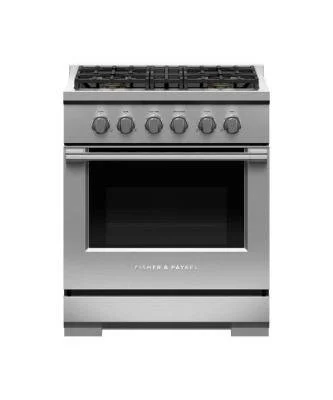
Courtesy of Fisher and Paykel

That’s exactly why the recent Fisher & Paykel gas range recall matters. Not because every gas range is dangerous, but because it highlights how important it is to pay attention when your appliances start behaving out of the ordinary.

When a Luxury Appliance Lands on a Recall List

In April 2026, Fisher & Paykel announced a recall affecting certain 30”, 36”, and 48” Professional Style Gas Ranges sold between June 2025 and March 2026. According to the recall notice, the affected ovens can experience delayed ignition, allowing gas to accumulate before ignition occurs. In some cases, that buildup can cause the oven door to open from combustion, creating a burn hazard.

Fortunately, the recall is relatively small in scale. About 433 units were sold in the United States and roughly 70 in Canada. Even so, the issue is serious enough that owners of affected models are being advised to stop using the oven portion immediately until repairs are completed.

The cooktop burners can still be used while awaiting service, but the oven itself should remain off until it has been inspected and repaired.

If you own a Fisher & Paykel professional gas range, this is a good time to check your model and serial number. The affected serial numbers begin with:

  • EEV

  • ERV

  • EAV

  • EYV

  • EUV

  • ELV

  • RFV

The model and serial information can typically be found behind the front kick strip or on the rear panel of the unit.
Stainless steel gas range in a modern luxury kitchen

Courtesy of Shovan Datta.

And while most homeowners reading this probably do not own a professional-grade range that costs more than a respectable used sedan, the bigger takeaway applies to every gas appliance in the kitchen: ignition problems should never be ignored simply because the appliance still technically works.

Sometimes appliances whisper before they scream.

Your Oven Is Trying to Tell You Something

One of the trickiest things about gas range problems is that they often start subtly. A burner lights a little slower than usual. The clicking lasts a few seconds too long. The flame looks slightly uneven. Nothing dramatic enough to stop dinner plans, but enough to make you pause for half a second and think, “Huh. That’s new.”

That pause matters.

Delayed ignition issues do not always begin with a major failure. Sometimes they begin with excess moisture, buildup around burner ports, ignition wear, or components that are no longer operating correctly.

A few warning signs homeowners should pay attention to include:

Persistent Clicking After Ignition

A gas burner should stop clicking shortly after the flame lights. If the clicking continues, there may be an issue with the igniter, burner alignment, or moisture around the ignition system.

Delayed Ignition or a Sudden “Whoomph”
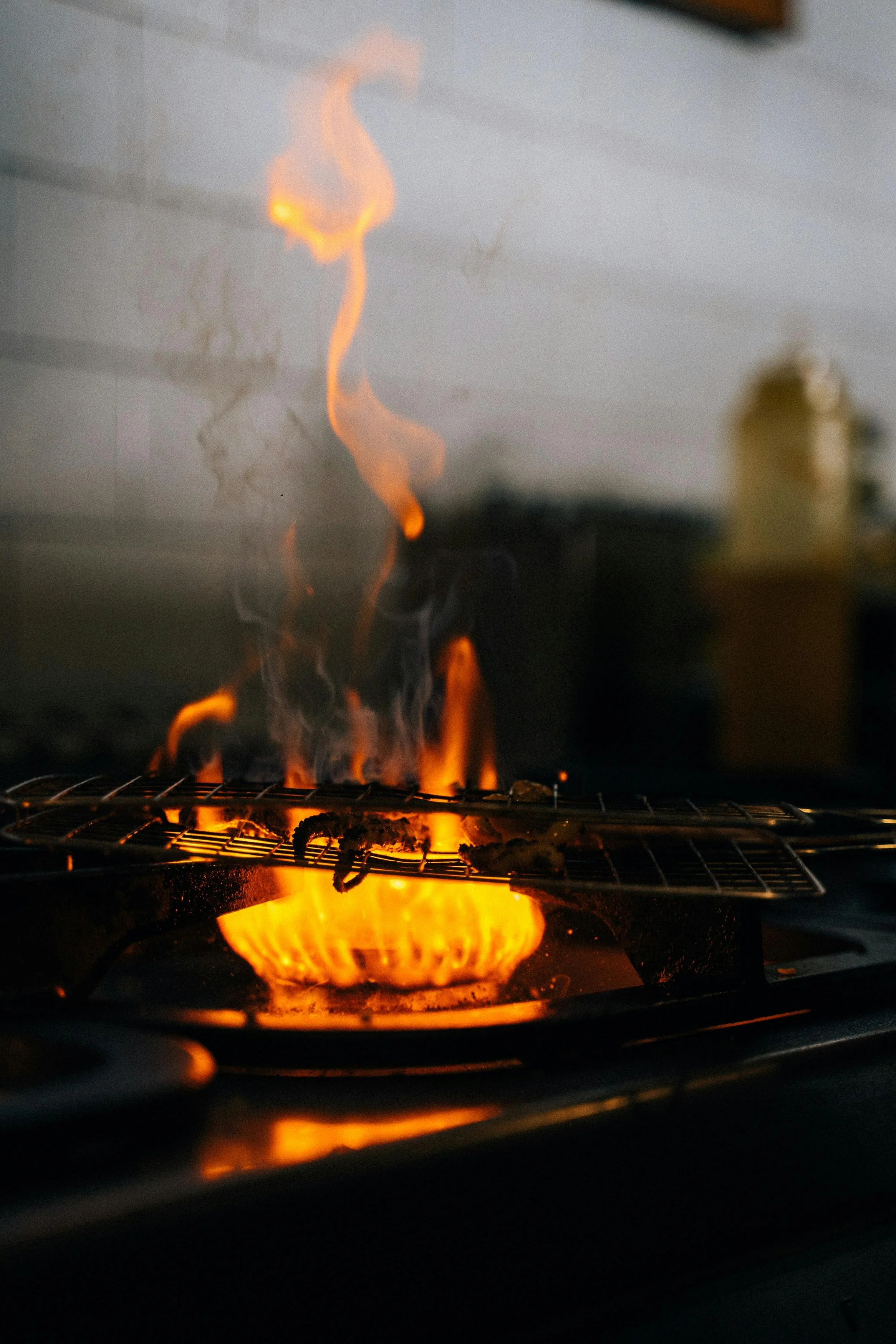
Uneven yellow flame on a gas stove burner indicating possible appliance issues

Courtesy of Anna Tarazevich

Gas ovens and burners should ignite relatively quickly and smoothly. If ignition feels delayed or you hear a sudden burst when the flame finally catches, that can indicate gas buildup before ignition.

That is not a symptom to casually shrug off while stirring pasta.

Yellow or Uneven Flames

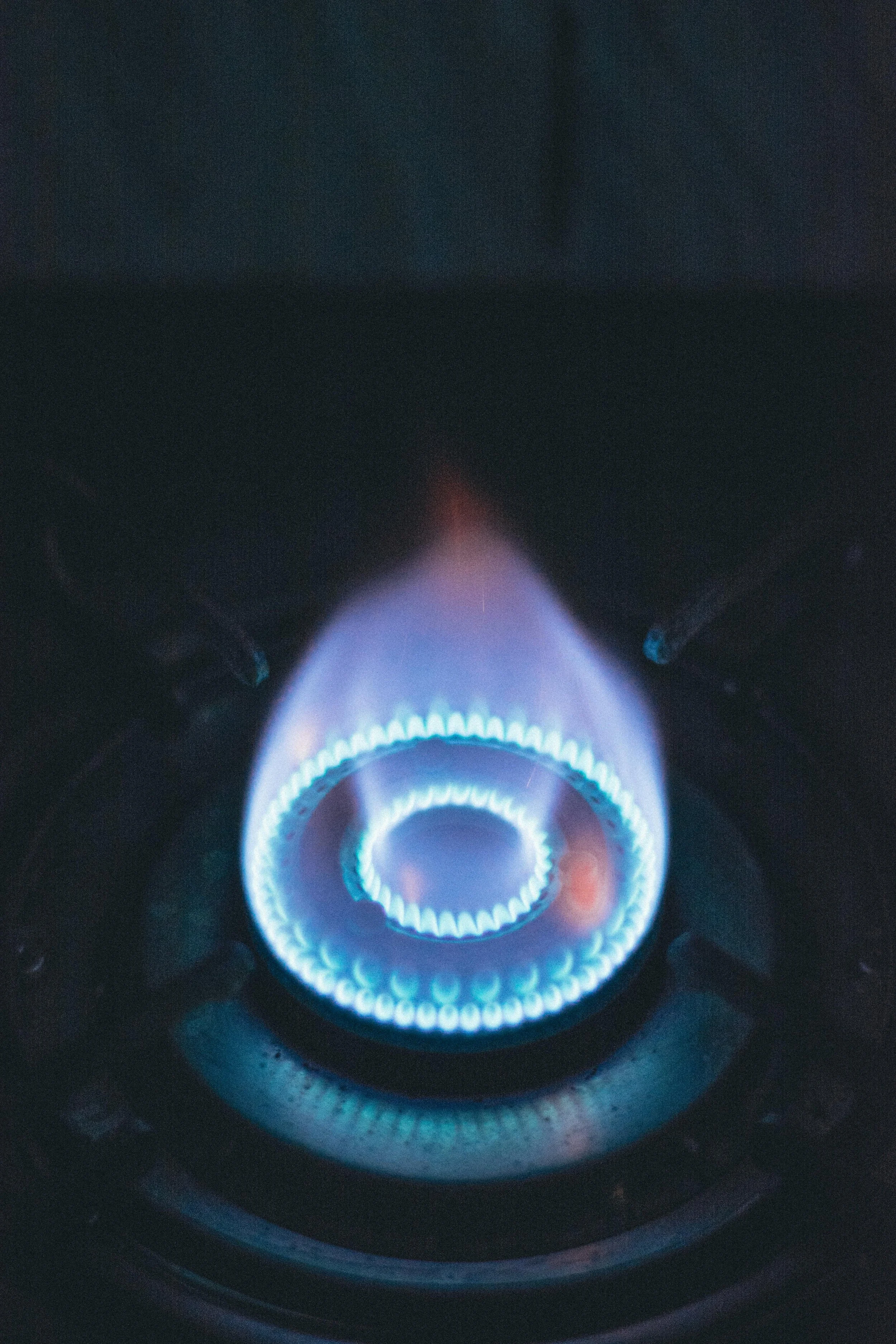
Healthy gas flames are typically steady and blue. Yellow, orange, or uneven flames can point to incomplete combustion, clogged burner ports, or airflow issues.

Burners That Light Inconsistently

If one burner works perfectly while another struggles every other Tuesday like it’s emotionally overwhelmed by dinner prep, something is likely interfering with ignition or gas flow.

A Gas Smell Near the Appliance

This is the one homeowners should always take seriously. If you smell gas around your stove or oven, stop using the appliance immediately. Ventilate the area if possible and contact the appropriate professionals.

Gas appliances are designed with multiple safety systems, but unusual smells should never be dismissed as “probably nothing.”

What Homeowners Can Safely Handle and What Should Stay Professional

Homeowner inspecting a gas oven in a modern kitchen

Courtesy of RDNE Stock project

There is a sweet spot between responsible homeowner maintenance and turning your kitchen into an accidental science experiment.

Some gas range issues are completely reasonable for homeowners to address safely. Others should absolutely stay in professional hands.

Safe Homeowner Maintenance

Basic cleaning and visual inspection are both smart and important.

Homeowners can safely:

  • Clean burner caps and grates

  • Remove food debris around burners

  • Check for visibly misaligned burner caps

  • Allow damp burner areas to dry thoroughly after cleaning

  • Watch for changes in flame color or ignition behavior

Many ignition complaints genuinely do come down to grease buildup, moisture, or burner caps that were bumped slightly out of position during cleaning.

The key word, however, is safely.

Always allow burners and grates to cool completely before adjusting or cleaning them. Nobody wants to explain an avoidable burn injury that started with “I just wanted to fix the flame real quick.”

When to Call a Professional

Some situations deserve more than a paper towel and optimism.

Homeowners should contact a professional appliance repair technician if they notice:

  • Repeated delayed ignition

  • Persistent gas smells

  • Burners that will not ignite consistently

  • Continuous clicking that does not stop

  • Yellow flames that persist after cleaning

  • Suspected ignition component failure

  • Problems involving internal gas or electrical components

Modern gas ranges are sophisticated appliances. Between ignition systems, gas valves, safety sensors, and electronic controls, many repairs require proper diagnostic tools and trained service work.

This is especially true for higher-end ranges, where precision components and specialty parts are involved.

In other words: cleaning a burner cap is homeowner territory. Disassembling gas components because a stranger on the internet suggested using a hair dryer near an igniter is decidedly not.

A Little Attention Now Can Prevent a Bigger Problem Later

Most appliance problems do not appear out of nowhere. They build gradually through small warning signs that are easy to ignore until they become impossible to miss.

The recent Fisher & Paykel recall is a reminder that even premium appliances can develop issues over time. Paying attention to unusual behavior early can help homeowners avoid larger repairs, safety risks, and a whole lot of frustration later.

If your gas range has started acting differently, whether that means delayed ignition, uneven flames, strange clicking, or inconsistent heating, the team at Appliance Rescue Service can help diagnose the issue and get your kitchen back to working safely and reliably.

Professional appliance service helps keep the machines you rely on every day running the way they should, without the surprise pyrotechnics. 🔥

Website
Call :(214) 599-0055

Courtesy of tazzmanian studios insta

Quick Fix or Costly Mistake? Myths About Appliance Repairs

From resets to DIY parts swaps—debunking the most common myths.

If you’ve ever searched online for appliance repair tips, you’ve likely encountered countless “quick fixes” promising to solve your problems in minutes. While they might sound like an easy fix, and even make sense in the moment many of these so-called solutions can do more harm than good—and cost you more in the long run. Let’s break down some of the most common myths about appliance repairs and why trusting professionals is often the smarter choice.


The “Duct Tape Solution” Myth


Myth: Duct tape can fix almost anything, including your appliances!


Courtesy of WikimediaImages

Reality: While duct tape is a versatile household staple, it’s not a permanent solution for appliance issues. Using duct tape to seal a leaky hose can work temporarily. In the long run, it leads to more extensive damage when the tape inevitably fails or interferes with the appliance’s ability to work. It’s commonly misused on cracked refrigerator shelves, loose washing machine panels, and even air conditioner vents, which can worsen over time. It’s especially important to keep in mind that it’s not designed to withstand heat, moisture or pressure, and shouldn’t be used for a long term solution. Duct tape is meant to be a stop gap. 


The Better Fix: Replace damaged parts with manufacturer-approved components and have them installed by a professional to ensure safety and longevity.


The “Just Reset It” Myth


Myth: Turning an appliance off and on will fix any glitch.

Reality: While resetting is often the first step  a professional will try with a smart appliance, it’s not a cure-all. Many modern appliances do rely on advanced chips to control them, and a simple reset can fix minor glitches. However while chips can be reset, deeper issues like malfunctions in the code, or damaged chips or hardware issues, like faulty wiring, worn motors or failing sensors can’t be ‘reset.’ Ignoring these signs can lead to more than momentary frustration. 

power off symbol on an appliance doesn't usually look like this, but we'll pretend.

Courtesy of Jules A.


The Better Fix: If the issue persists after resetting, it’s time to call in an expert. A professional can diagnose the root cause and prevent the problem from escalating.


The “It’s Cheaper if You Do It Yourself!” Myth


Myth: You can save money by replacing broken parts yourself.


Reality: While it might seem straightforward to swap out a damaged part, modern appliances often have complex systems that require precise installation. They can also be tricky to get to and require a full disassemble of the appliance, or tools made just for the appliance. A DIY attempt can lead to improperly fitted parts, voided warranties, or even safety hazards like electrical shocks or gas leaks.

courtesy of congerdesign.


The Better Fix: Always consult a professional for repairs involving electrical or gas components. This not only ensures safety but also maintains your appliance’s warranty coverage.


The “Overloading Isn’t a Big Deal” Myth


Myth: Appliances are built to handle more than their recommended capacity.


Reality: This one is as much a  time-saving trick that we try as well as an appliance trick. While it’s hard to overload your dishwasher, we all have overloaded our washers and dryers at least a time or two. With your dishwasher, it’s a problem of putting in too many heavy pots and pans or squishing in every single plate. This can present proper water circulation which leaves your dishes dirty, and overworks the dishwasher. With the washer and dryer there is a recommended amount that you can fill it to. When you overload it, that strains the motor, and throws off the balance within the machine. This causes damage to the drum and the bearings, and lands you a hefty bill. This “quick fix” for saving time often results in expensive repairs or even appliance replacement. 


The Better Fix: Stick to the manufacturer’s recommended load capacity. If you’re frequently running out of space, consider whether it might be time to upgrade to a larger machine instead. 

The “Tap It, and It Will Work” Myth


Myth: If your appliance stops working, give it a tap, and it’ll start again.

Reality: While this old-school “fix” might occasionally work for loose connections, it’s not a reliable or safe solution. Repeatedly jostling your appliance can damage internal components and worsen the issue. Besides, “percussive maintenance” may provide a moment of satisfaction, but it rarely provides a lasting fix.

Courtesy of Steve Buissinne


The Better Fix: Don’t rely on a temporary “tap” solution. If your appliance isn’t functioning properly, it’s time for a professional inspection.


When it comes to appliance repairs, quick fixes often lead to long-term headaches. Instead of risking further damage or voiding your warranty, let the professionals at Appliance Rescue Service handle the job. Our skilled technicians know how to address problems safely and effectively, ensuring your appliances keep running smoothly for years to come. Call us today to schedule a repair and give your home the care it deserves.

Website

Call (214) 599-0055

Additional Reading


The Risks of DIY Appliance Repairs and How to Avoid Them
Keep Your Dishwasher in Top Shape

The Hidden Costs of Delaying Appliance Repairs


DIY Repairs vs. Your Appliance Warranty: What’s the Real Cost?

Discover why DIY repairs might end up costing you more than hiring a professional.

We’ve all been there—your dishwasher stops draining, or your washing machine begins to leak water just as you’re about to leave for work. Thanks to the rise of online tutorials, it's tempting to say I'll fix it! After all all you need is a few basic tools and a video right?  So why wait for a technician when you can DIY? Pause the moment though before you grab that wrench. It's important to ask: is it really worth the risk? While talking repair on your own seems like a great idea in the moment, One missed step or unaccounted for fact, can end up costing you much more than you think. And your appliance warranty is only the start.


The Safety Net of Appliance Warranties

Appliance warranties are a safety net many of us don't think about right until we need it. The standard warranty you will get, should cover the cost of repairs and replacements for major parts and labor. This gives you peace of mind if something happens within a specific time frame. If for instance your refrigerator is compressor gives out within the warranty period,  you can save hundreds of dollars. Without that warranty? It comes out of your pocket.

A warranty will typically extend from 1 to 5 years depending on the manufacturer. Whether something broke in transit, came off the manufacturing line with something wrong, or it just breaks, that warranty is your lifeline. However warranties also come with strict rules that you have to adhere to. This includes that all repairs are done by licensed professionals. So this means that any DIY attempts can immediately void your safety net.


The True Cost of DIY Repairs

It's so easy to fall into the trap of DIY appliance repairs. You don't want to wait for someone else to have to come, and having to take time off from work in order to be there, and then pay them on top of it. We get that. Especially with online repairs promising it's a quick 5 minute fix and you get the rush of satisfaction knowing you fixed it yourself. 


However, many warranties explicitly state that if you attempt to repair the appliance yourself, it voids the warranty. So, even if you do repair the faulty thermostat in your oven, if you break another sensor in the process of doing it? Your warranty is gone and all future repairs are paid for out of pocket, and that's even if you should have had another four years under the warranty.

You're smart though, you wouldn't try replacing the thermostat in your oven. What about a hose on your washer though? Imagine that you're washing machine starts leaking. After all, in several of our articles we tell you to pay attention to the hoses on your washing machine and to replace as needed,  so you're just trusting us. But in this case, the issue isn't on the outside. It's not easily visible by eye, and all you know is that the washer is leaking. So you find an instructional video online, and you open up the machine. That's where you find a cracked hose. At this point the video has been great so you replace the hose, but you accidentally damaged a small sensor that's needed for telling if the drum is full or not. Well since you opened up your washer, you voided your warranty. This means that you're stuck with the repair bill for the sensor as well as the hose.


This isn't just about your warranties though. Homeowner insurance policies don't always cover DIY repairs either. So this means that Financial risk can go beyond just the appliance. If our washing machine from our last example, continues to leak and damages your floor, you could be on the hook for that. Which then doubles your costs.


Safety and Hidden Risks

We've talked about your warranty and about your homeowners insurance, but doing DIY repairs can also put you at risk. Appliances like an electric dryer or a gas oven serious personal risks. If improperly handled, you can easily be shocked, start a gas leak, or a fire. There is a reason that we always say that if you don't have the proper training or if you're even a little uncertain, to call in a professional. 


A professional will have the proper training, to handle high voltage appliances. Professionals also have to know how to properly disengage gas appliances to safely fix them, without leading to gas or fire hazards.


What's more, many DIY attempts are due to misdiagnosed problems. It's easy to mistake one issue for another without professional training. This leads to improper repairs that not only can worsen the initial problem but they end up costing you time and money. And because it's difficult to get hold of the actual parts you need most fixes end up being temporary at best.


Why Professional Repairs Are Worth It

While DIY repairs may seem like a cost-effective solution at first, the risks involved usually make professional repairs the smarter choice. Licensed technicians are trained to diagnose and fix problems without causing additional damage. More importantly, hiring a professional ensures that your warranty remains intact, allowing you to take full advantage of any future coverage if needed.


Professional repair services also save you time and frustration. They also keep you from the potential of medical bills if something goes wrong. What would take one of us several hours to disassemble research and troubleshoot, is fixed by a technician in a fraction of that time. Certified professionals also have access to trademarked tools and original parts to ensure that the repair is done correctly the first time.


Conclusion: Protect Your Warranty, Protect Your Home

In the end, your appliance warranty is a valuable asset that you shouldn’t risk on a DIY gamble. While there’s nothing wrong with wanting to fix things yourself, the potential costs of voiding your warranty and causing further damage simply aren’t worth it. By trusting professional repair services like Appliance Rescue Service, you can rest assured that your appliances will be fixed correctly, keeping your warranty intact and your home running smoothly.


If you do have something that has gone wrong around your home, we hope you'll give us a call. You can reach us through our website or our offices where we will work with you to set up a time and date that fits your schedule. 

Website

Call ((214) 599-0055)

Additional Reading
Prepare Your Home for Fall: Essential Maintenance Tips

Household Hauntings: The Frightening Reality of Appliance Neglect

37 Reasons To Have Your Appliances Maintained Regularly