
Prices are climbing, but a clean washer doesn’t have to devour your wallet.
We see the news every day about how prices at the grocery store are climbing, and that affects every aspect of the home. Unfortunately, cleaning your home is no less a necessity just because prices go up. In the start of a series, we’re looking at what do you actually need, both in terms of time and money, to clean different appliances around your home. This week we’re looking at your washing machine, how to get it deep cleaned and how often you should be doing it.
For those of you who want to get straight to it, let’s see if we can back up our claim that cleaning your washing machine does not have to be time- and wallet-devouring. Below is a full list of items you might have to purchase brand new. There are a few things we expect you to already have, like towels and a bowl, but if you wanted to buy everything new just for this project, here is a breakdown of prices at your local big box store as of 10/26/26.

Gear that lasts
- A spray bottle: $3.87 for a good one, which isn’t a bad price
- Microfiber cloths: $9.98 for a pack that will last you far more than this one instance
- A pack of multiple toothbrushes: just $1, unless you want to cannibalize an old one and not use it again after this
That’s $14.85, one time. Even the toothbrush, whether you cannibalize one you need to replace anyway or buy a brand new pack, can be reused many times before it needs replacing.
Supplies you’ll use up and restock
- White distilled vinegar, one gallon: $3.94
- Bleach: $4.58
- A box of borax: $6.98
- Baking soda: $0.97 for a full pound
- Disinfecting wipes: $5.52
That’s $21.99. These are the items you’ll replace as you go, and baking soda goes first, since one pound only covers about two monthly cleanings.
All of these prices have gone up in 2026 alone, and that’s not even looking at how much they’ve gone up over the last several years. But that is where things sit right now.
So for cleaning your washing machine inside and out, you have an initial investment of $36.84. Once you’re set up, a top loader costs about $9 a year in restocked supplies at our recommended schedule, and a front loader costs about $15.
Not included: a drain snake, if you find a clog, and oxygen-bleach tablets, an optional extra for stubborn smells.
How To Clean Any Washer
Now let’s take a look at how to clean your washing machine. Cleaning the outside is the same no matter which type you have, but cleaning the inside, and how often you clean different areas, will differ depending on your machine. We’ll separate this out into cleaning the outside, then cleaning the inside of top-loading washers with two different levels of cleaning, then cleaning the inside of front-loading washers with two different levels of cleaning.
For cleaning the outside of your washing machine, start by grabbing your disinfecting wipes. Take off anything you’ve used to decorate your machine, like magnets, flyers, or anything else that comes off easily. Wipe everything down with a disinfecting wipe, making sure to remove any dust or lint buildup. Then mix a 50-50 solution of vinegar and water and spray down the outside again. Look for any grime or water spots you might have missed in the first pass. Wipe it down a second time with a microfiber cloth dampened with plain water, and allow it to air dry.
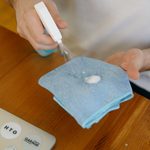
Now let’s look at what you’ll need to clean a top-loading washing machine. For this, we’re going to do two different versions: a quick clean and a deep clean.
For the quick clean, start by taking out your agitator. There are two types common to top-loading machines: a post variety and a low-impact impeller variety. If you’re uncertain which you have, check your manual for how to remove it. Most of them just pop out, but there are always differences between makers. Once you’ve removed it, take it to your sink and scrub into all the nooks and crannies with your toothbrush and some warm soapy water. Allow it to air dry, then return it to your washing machine.
At this point, pour about 4 cups of white vinegar into the machine, set it to your highest and hottest water setting, and let it run. Once it has filled, but not yet started to agitate, press pause and allow the vinegar and water to soak. Set a timer for an hour, walk away, and do something to relax. When the hour has passed, come back, restart the cycle, and let it run until it’s completely finished. Once our first cycle has ended, add a cup of baking soda and start a new wash cycle at the same hot settings. When that’s done, leave the lid open and let the machine air dry. This can easily be done once a month. It doesn’t take much from you, and most of it is just measuring things out.
Now, for a deep clean of a top-loading washing machine, let’s assume you’ve been gone for a while, or you’re helping a family member. How do you do that? Start by locating the drain on your washing machine. Lay out an old towel or set a bowl down to catch the water. Unplug the machine and carefully disconnect the drain from the pipe, or, if the machine drains into your laundry sink, place the hose into an empty tub or the sink and allow everything to drain out. See if there’s any gunk inside, and if there is, you might need a drain snake. If there isn’t, take the time to soak the drain in vinegar to remove mildew, and clean it with an old toothbrush. Wipe away any residue with a damp cloth. Then rinse it all out with water, to clear the vinegar fully.
Next, find your filter. Check your owner’s manual, because it can be in a lot of different places. Take it out and clean it with a cloth or a toothbrush to remove any fur or debris. Once you’ve replaced it, open any other compartments for detergent, fabric softener, or anything else, and clean those as well, again using just white vinegar and your toothbrush, or warm soapy water if you can remove them. Rinse with water, dry, and put them back in place.
Once everything is clean, reconnect everything. Remove your agitator and clean it as before, getting into every crevice with vinegar and hot water, or hot soapy water as needed. Remember to rinse with clean water prior to returning it as we don’t want to mix vinegar and bleach in our next step. Once you’ve returned your agitator, add 2 cups of bleach to the machine and run the hottest cycle available. Then run another cycle to get rid of any bleach deposits or anything else remaining in the drum. Finally, if anything around your washer is still smelly, either under it or inside it, hit it with vinegar and a microfiber cloth, and allow everything to air dry.
Now let’s take a look at front-loading washing machines. They’re different because of the door gasket, which keeps all the water from flooding out of the drum every time you run a load of towels. This means front loaders need one extra step after every load: run a microfiber cloth over the door gasket to dry it, then leave the door propped open. This lets the interior of the drum dry between uses, keeps wet, warm air from building up inside, and keeps the gaskets from molding.
Once a month, do a quick 30-minute clean, which is very straightforward. You’ll need your white vinegar and a spray bottle. Spray the inside of the washer with white vinegar, then wipe all around the drum with one of your microfiber cloths, making sure you get everything. Next, hit all of the rubber gaskets around your door. As you do this, you’ll come across all sorts of gunk that has built up, like mildew, lint, hair, skin, and detergent leftovers. That’s why we do this step.
Then mix about a third of a cup of bleach into a gallon of water, and wash down the gasket with a sponge or one of your microfiber cloths. Once you’ve washed it thoroughly, every single bit of it, rinse it with a clean cloth and water to remove any residue. Take a third cloth and wipe down your drum with just water to make sure it’s clear of the vinegar from the first step. See? Quick and easy. You can do it while the dryer’s running.
For a more in-depth cleaning, which should be done quarterly, start by running a hot cycle with 2 cups of borax. This softens any residue inside the drum and the drain. Once that has finished, run another hot cycle with 2 cups of distilled vinegar, poured directly into your liquid detergent dispenser. Set it to the longest cycle possible and let it run. When that’s done, scrub the door gaskets and your detergent tray with a toothbrush and hot water, rinse with clean water, and reinsert the tray.
If, after all this, your machine is still smelly, whether it’s a top loader or a front loader, you might consider a slow-dissolving tablet made of oxygen-based bleach and sodium carbonate. You run these through the washer without any clothes or towels, and they get in between everything you might miss on your own.

When to Clean Your Washer
Now you’ll notice that we gave you several options for cleaning your washer. When should you do each, and how often do you absolutely have to?
After every load (front loaders): Wipe down the door and gasket with a microfiber cloth and leave the door propped open. As we mentioned, this stops the drum from becoming a mold- and mildew-friendly place, and it takes [X] minutes.
Monthly (front loaders): The quick clean, which takes about 30 minutes. It keeps residue like skin, dirt, lint, and detergent from building up on the gasket and in the drum.
Every 3 months (top loaders): The quick clean, which takes about an hour but is mostly spent letting the machine run while you do something else. Texas hard water leaves more mineral buildup, so if that’s you, consider doing it monthly.
Every 3 months (front loaders): The in-depth clean with borax and vinegar.
Once a year (both): The deep clean. This is taking as much apart as you can, scrubbing the filter and detergent drawers down with a toothbrush, and using bleach where applicable to kill any chance of something living inside the drum. (Remember, never mix vinegar and bleach. We don’t want to create chlorine gas.)
If you don’t have time to do the yearly deep clean, give us a call. We offer maintenance services in addition to repairs, and as we always point out, maintenance counts for a lot when it comes to keeping your appliances running smoothly. Appliance Rescue Service is here for you, and we work with you and your schedule to find the best times that fit your life.
Website
Call :(214) 599-0055