
Steadiness is the whole job, and a failing cooler loses it first.
A shocking revelation perhaps, but, wine coolers don’t exist to make your wine cold. They exist to keep your wine from changing. A wine cooler works to keep 5 different categories in check for your wines, so that they are good to drink now or 50 years from now; humidity, temperature, vibration, light exposure, and the positioning of the cork. Each of these elements works together to ensure that your wine changes very slowly, and doesn’t get destroyed before you open it.
What a Wine Cooler Actually Does
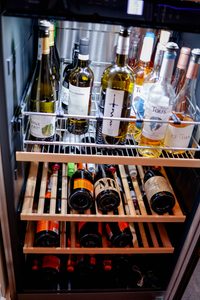
A kitchen fridge runs around 37°F, is dry, and gets opened forty times a day. That’s fine for milk and rough on wine.A wine cooler is built for the opposite conditions: warmer, gentler, and far more consistent. Warm wine speeds up aging and flattens the flavor. Temperature swings are far sneakier, because a bottle that warms and cools repeatedly throughout a day, or even a week, stresses the cork and invites air in. Oxidation does the rest, and a good red slides toward vinegar.The better units handle the other storage rules too. Many have UV-tinted glass, because light can give wine a damp-cardboard flavor, even when the bottle is tinted. Many have racks that hold bottles horizontally, which keeps corks moist and sealed. Humidity is the one to watch: the ideal is 50 to 70 percent, but not every unit manages it, so a cheap hygrometer is worth the few dollars.If you’re opening a bottle this week, none of this matters much. However, if you’re keeping bottles for months or years, it’s everything. The standard of care that you give your collection is going to say whether you open wine or vinegar when the time comes.
Why It Matters (Especially Here in Frisco)
You could skip the cooler and store wine in the kitchen, the laundry room, or the garage if you wanted to ruin a perfectly good bottle. In North Texas, those are three ways to slowly cook it. Kitchens run warm from ovens and dishwashers, and garages swing from sweltering to cold. A closet is better, but it’s a gamble in July, especially if you don’t have A cooler gives you a stable spot no matter what the house is doing. A few choices are worth knowing about:
Single-zone or dual-zone.
Single-zone units hold one temperature, which suits long-term storage of any wine and tends to cost less. Dual-zone units let you keep one side at storage temperature and the other at serving temperature.
Compressor or thermoelectric.
Compressor units work like a traditional refrigerator and can keep cooling even when the room gets hot. Thermoelectric units are quieter and have no compressor, but they can only cool a limited number of degrees below the air around them. In a warm garage or sunroom, that limit can mean a unit that never reaches 55.

What It Looks Like When It Goes Wrong
Every sign of a failing wine cooler is a version of the same failure: the unit can’t hold steady.
Here are some signs to know and look out for if you have or are planning on getting a wine cooler.
The temperature wanders.
If the display says 55 and a separate thermometer says otherwise, the unit’s reading can’t be trusted. Temperature drift is the earliest warning, and it’s easy to miss because nothing looks broken.
If it cycles constantly, or won’t start, there’s a problem somewhere.
A cooler that’s always switching on and off is struggling. One that won’t start has already stopped protecting your bottles.
Its decided to start making new noises.
Loud humming, rattling, or clanking usually points to the compressor or fan. Beyond the annoyance, a noisy unit often means a vibrating one. (and remember, vibration is not good for your wine.)
There’s water where there shouldn’t be.
Excess condensation inside, or moisture pooling around the unit, points to a cooling or sealant problem. Just like your refrigerator and freezer, your wine cooler can’t hold a proper temperature if the seal is broken.
The electric bill creeps up.
An overworked unit uses more power to do less.
It’s old, or it’s been repaired repeatedly. A cooler near the end of its life can look fine right up until it isn’t. If you keep calling for fixes, at some point repair costs more than replacement, and a good technician will tell you honestly when you’ve reached it.
Don’t Wait on It
Whether it’s a collection you’ve built over years or a few bottles you actually like, a failing cooler doesn’t announce itself. By the time the wine tastes wrong, the damage is done.If your wine cooler isn’t holding temperature, or just doesn’t seem right, call Appliance Rescue Service. We’ll outline the job before we start and share a few tricks of the trade to help your unit last. We work with you to set a time and date that fits your schedule, so we can get your home running smoothly again.
Website
Call: (214) 599-0055